From Campaign Tents to Campfires
A foldable camping chair looks simple, but there is a lot of history packed into those hinges and straps. When nights turn cooler and we start planning fall campfires, tailgates, and cabin weekends, that little chair suddenly matters a lot more than we think.
How it is shaped decides if our back feels good, if we can stand up easily, and if the chair survives more than a couple of trips. That is why the story behind the foldable camping chair is worth knowing. When we understand where these designs came from, we get better at spotting what will last, and what will end up twisted in a campground trash bin.
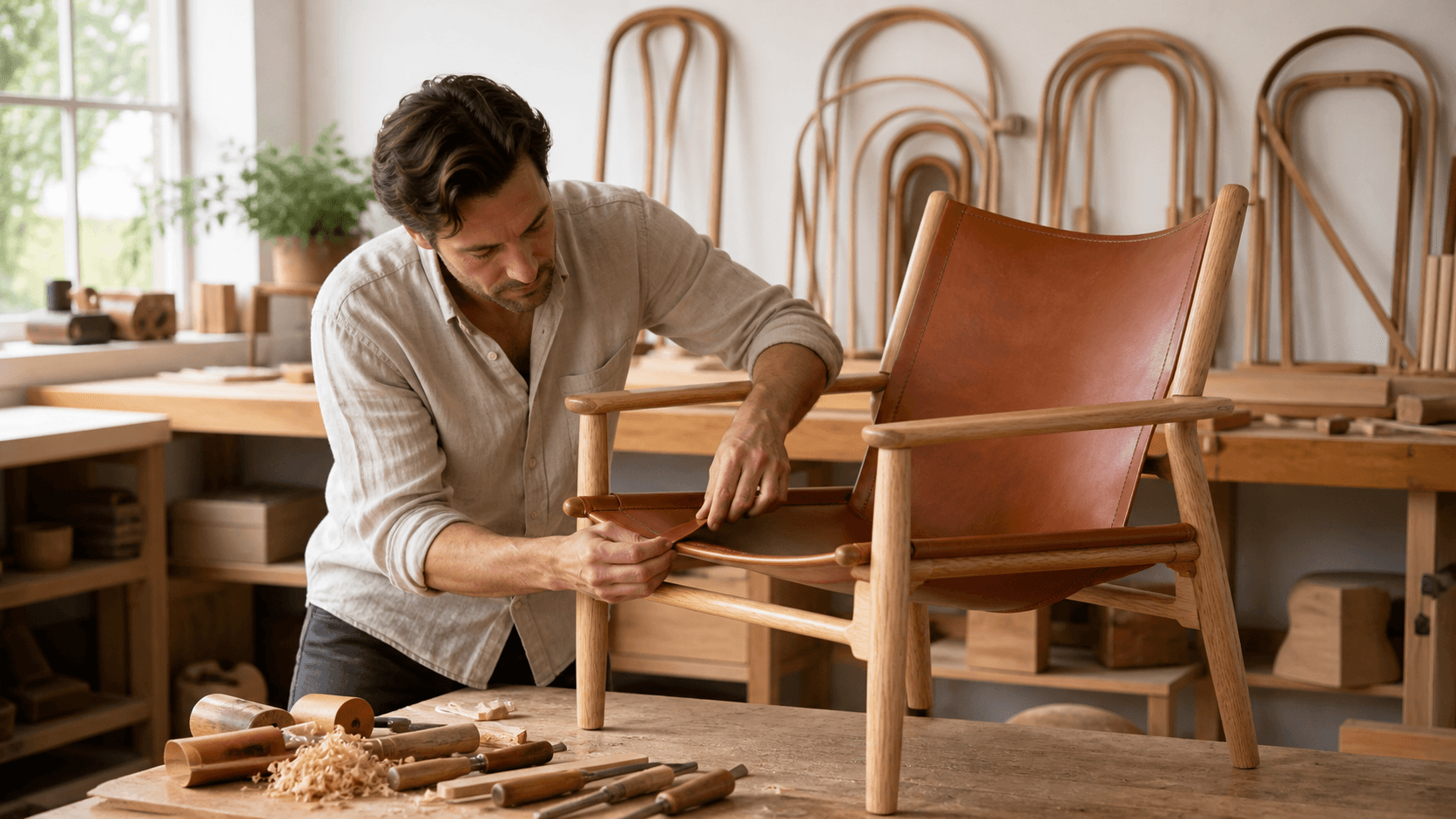
At Imprint, we care about that long view. Our oak and leather folding chairs are part of a quiet return to heirloom outdoor gear, the kind you can pass along instead of throw away. To explain why that matters, we will walk through key design ideas, patents, and iconic models that led from old military campaign furniture to the kind of luxury camp chair you can proudly keep in your living room.
Military Roots of the Folding Camp Chair
Long before weekend camping was a hobby, armies needed furniture that could move with them. Officers used what was called campaign furniture, designed to be packed on wagons and set up quickly in muddy fields or canvas tents.
Common pieces included:
- X-frame folding stools with leather tops
- Wooden chairs with canvas or leather slings
- Collapsible cots and tables that broke into flat sections
Early makers solved the same problems we still face: how to get strength from wood joints, how to tension leather or fabric so it stayed supportive, and how to fold pieces without weak points. Simple hinges, pin joints, and leather straps let frames fold while still handling rough use.
Those ideas shaped the modern foldable camping chair. The focus was on:
- Compact packing and fast setup
- Durable joints that could handle travel
- Weather-ready materials that could be repaired in the field
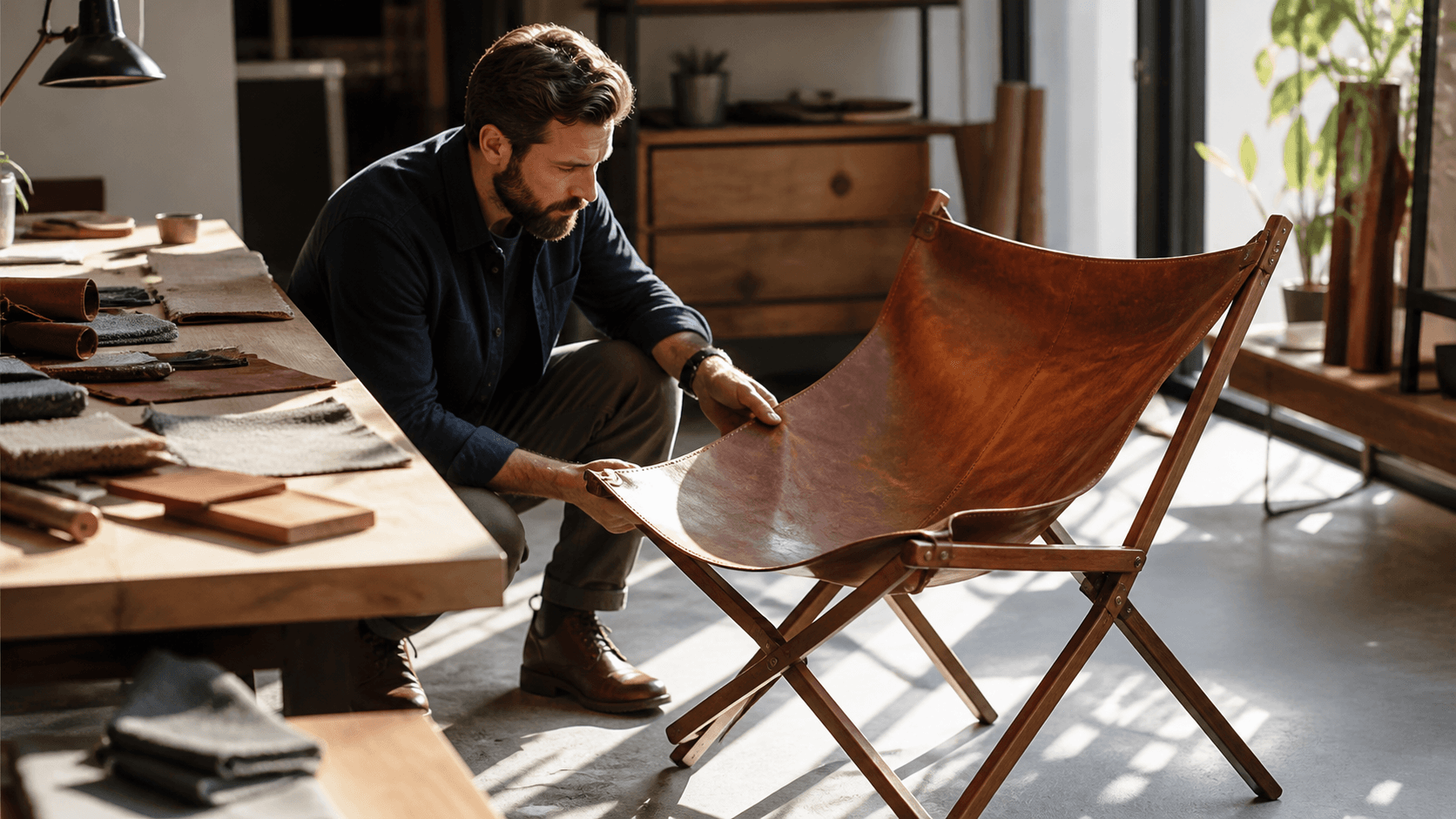
Today, when we build with oak frames and leather seats, we are echoing those old officer chairs. We use updated joinery and finishes so the chairs feel at home by the fire or in a city apartment, but the spirit of mobile, reliable field furniture is still there.
Patent Breakthroughs and Packing Small
As camping grew outside the military, inventors filed patents for new ways to fold, stack, and carry seats. A lot of familiar shapes started as clever solutions drawn on paper.
Some big moves in folding design were:
- Scissor-leg frames that closed like scissors for a smaller footprint
- Butterfly-style chairs where fabric hung from a crossed frame
- Telescoping metal tubes that slid into each other to shrink the chair
Ergonomics also started to change. Early chairs kept people upright, with straight backs and no arm support. Over time, patents added:
- Angled backs for relaxed sitting around a fire
- Armrests that helped with standing up and winding down
- Cross-bracing that kept the chair steady on uneven ground
Material shifts played a huge role. Metal tubing replaced heavy wood. Synthetic webbing and high-tensile fabrics took over from leather as makers chased lighter weight and mass production. Many modern folding chairs grew from this push for smaller shipping boxes and lower factory costs.
As craftspeople, we think about those same design problems but with a different goal. Instead of only asking how flat a chair can ship, we focus on how strong the joints feel, how the weight balances in your hands, and how the surfaces feel against your skin after years of use.
Iconic Camp Chairs That Shaped Outdoor Culture
At some point, the foldable camping chair stopped being only gear and started to become a lifestyle symbol. Think about classic webbed lawn chairs on the porch or the director chair silhouette on movie sets and patios. Those shapes set expectations for what a portable chair should look and feel like.
A few types stand out:
- Mid-century folding lawn chairs that made backyard relaxing part of daily life
- Director-style chairs with solid arms and strong side rails
- Compact backpacking chairs that sit low and pack into tiny bags
- Oversized and reclining models designed for long, lazy evenings outside
Marketing around car camping, tailgates, fishing trips, and overlanding helped lock in the idea of the folding chair as your claim to a small patch of comfort. Set it down, and for a while, that spot by the river or fire is yours.
The newest wave of high-end folding chairs takes this further. These designs move smoothly between patio, campsite, dock, and cabin. They have the strength and function of outdoor gear but look good enough to leave out in a den or reading corner.
From Disposable Gear to Heirloom Pieces
Many of us know the frustration of a cheap foldable camping chair. The fabric frays, one leg bends, the plastic arm cracks, and suddenly it is useless. That throwaway cycle is starting to feel old.
Outdoor ergonomics has picked up some clear lessons:
- Seat height needs to be high enough so standing does not strain knees
- Back angles should support conversation, not force a slump
- The seat should flex a bit but not sag into a hammock shape
- Natural materials can make people feel calmer and more grounded
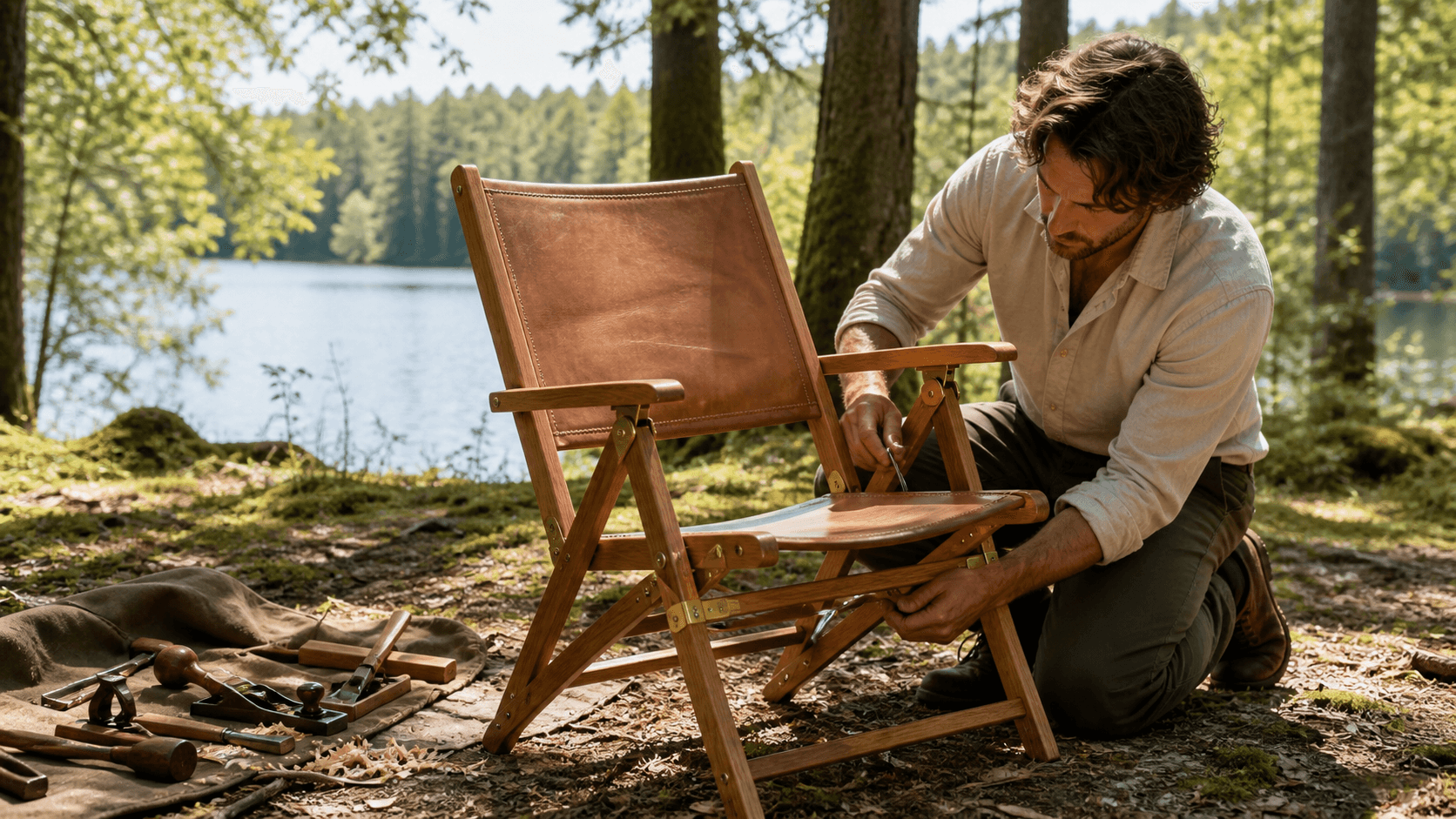
At Imprint, we build around those ideas. Solid oak develops a rich patina, so scratches and bumps become part of the story. Leather forms to each person's shape, getting more comfortable instead of wearing out quickly. Hardware is chosen with field repairs in mind, so small fixes can keep a chair going, rather than sending it to the dump. The folding geometry protects the seat and arms during transport and storage, which matters when the chair lives in a trunk or gear closet for much of the year.
Seasonal care ties into this heirloom mindset. In cool, damp months, it helps to:
- Store wood and leather away from standing moisture
- Brush off dirt and grit before folding and packing
- Let gear dry fully after mist or fog
- Accept scuffs and color changes as part of the aging process
Patina is not damage; it is memory. Over time, a well-made folding chair can start to feel less like a piece of equipment and more like part of the family, present at every fall campfire, porch sunset, and cabin trip.
Upgrade Your Outdoor Comfort With Custom Seating That Travels Anywhere
Make your next event, tailgate, or weekend in the woods more comfortable with a custom-branded foldable camping chair that packs light but makes a big impact. At ImImprint, we help you choose the right style, colors, and imprint options so your logo stands out at every campsite and outdoor gathering. Whether you need a few chairs for a small team or a bulk order for a large promotion, we streamline the process from design to delivery. Start planning your order today and give your brand a useful, memorable spot in every outdoor adventure.