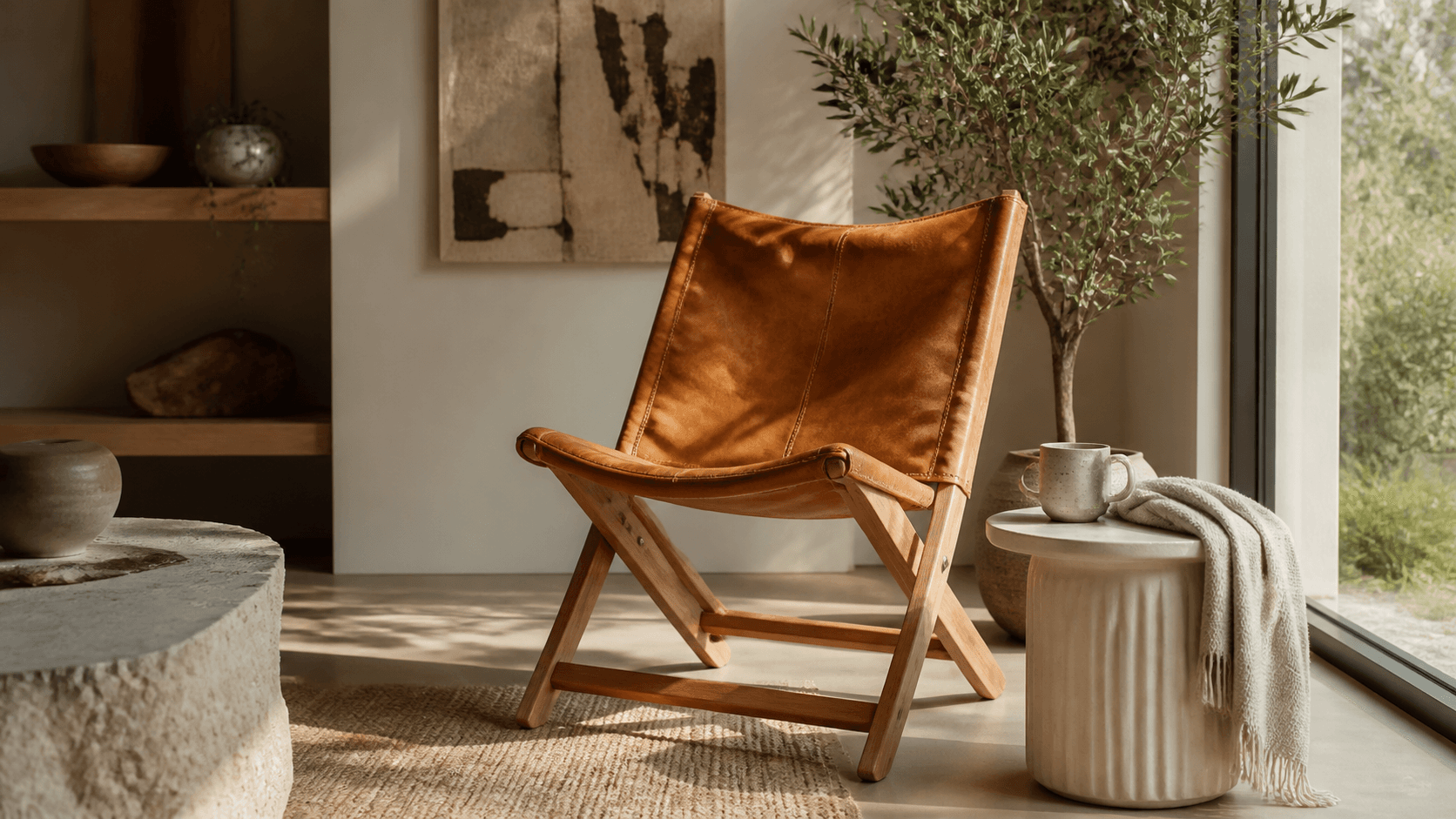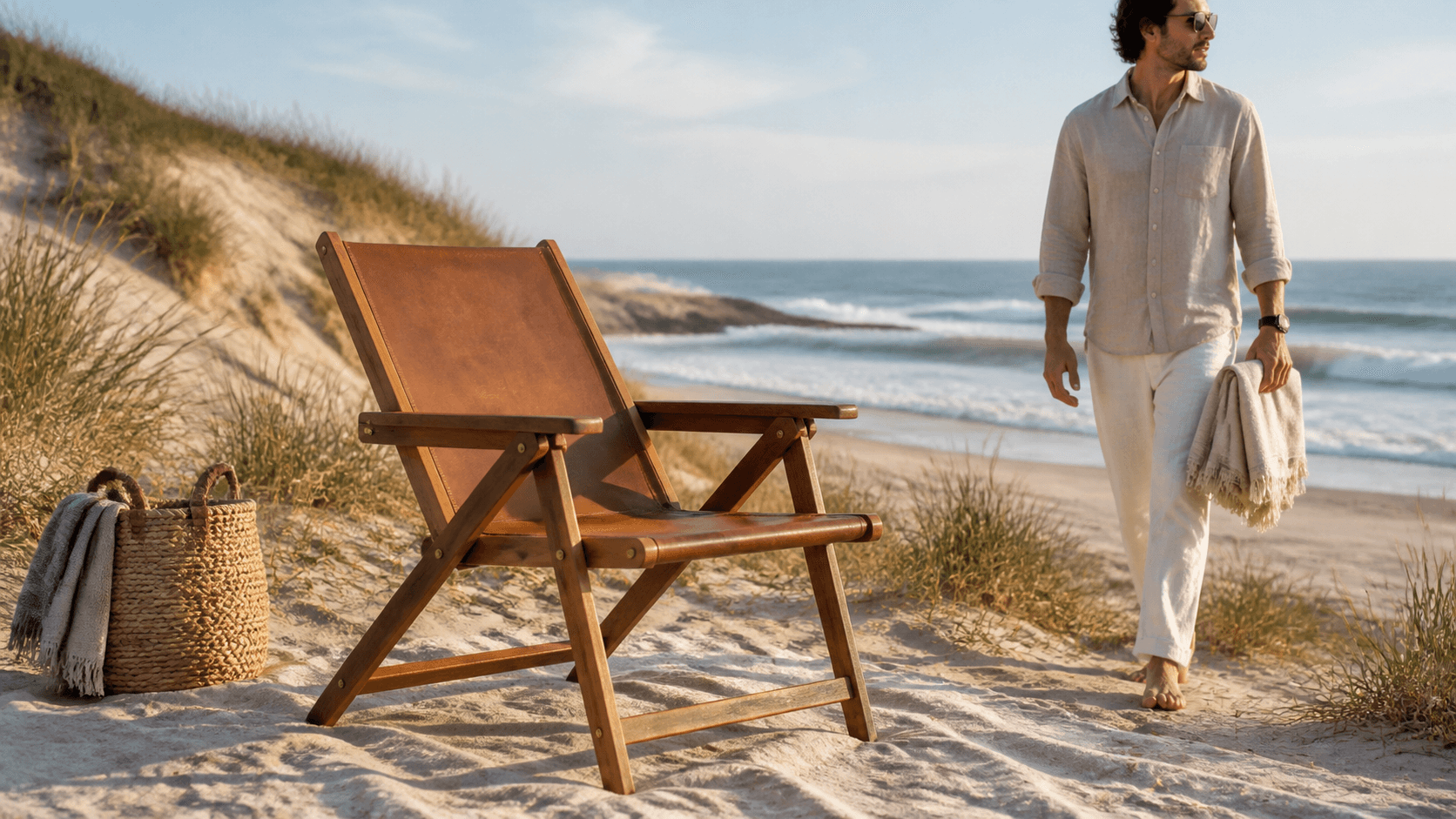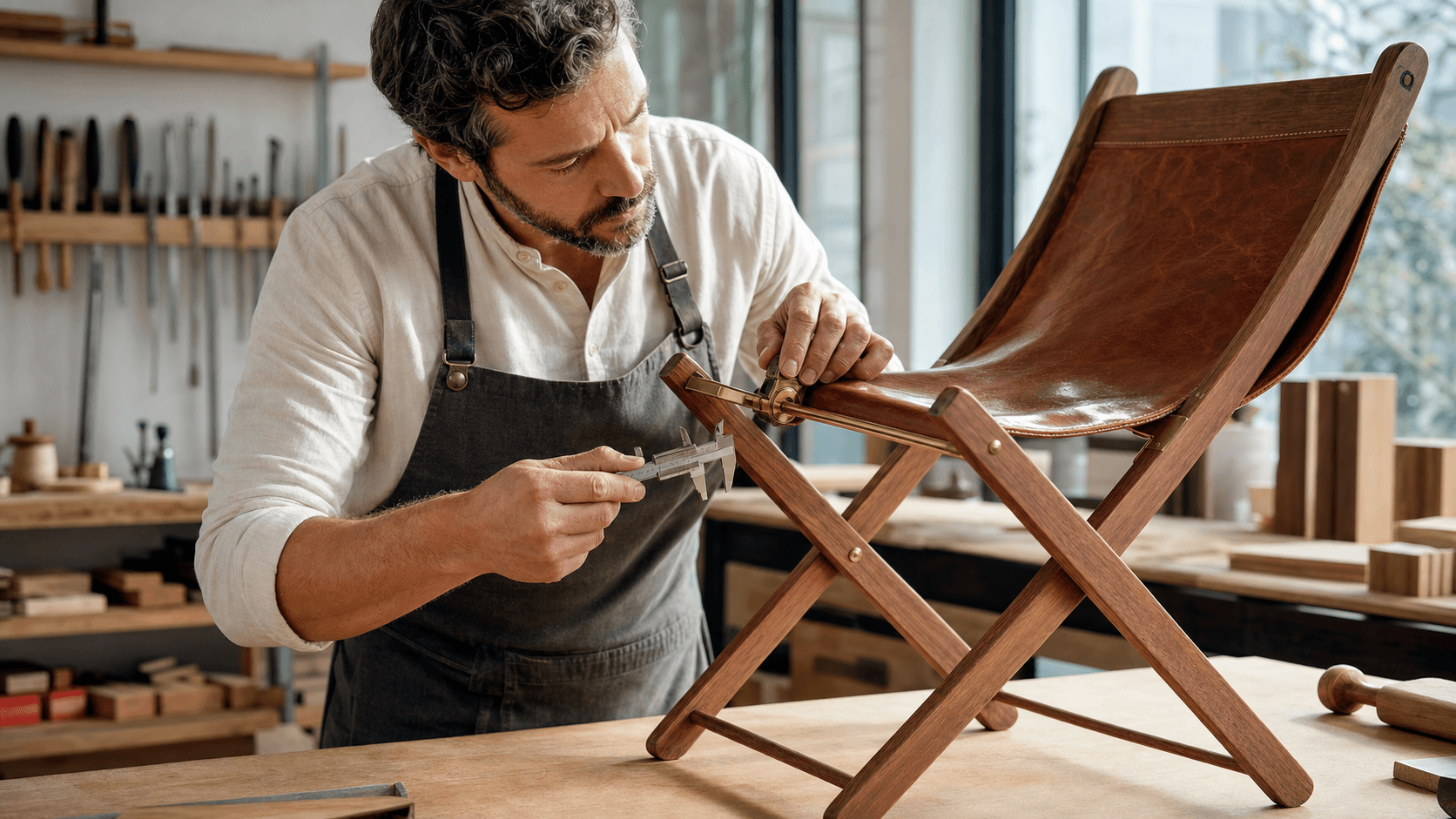
Elevate Your Summer Seating with True Craftsmanship
Buying an artisan folding chair is different from grabbing another camp chair off a store shelf. You are choosing something you will sit in, carry, fold, and unfold for years, maybe even pass down. That means the way it is built, down to the small details, really matters.
Summer makes this even more important. Backyard dinners, lake days, kids' games, outdoor concerts, all of that puts a lot of stress on a chair that needs to move and still feel solid. A well-crafted folding chair should feel like real furniture, not a temporary fix. It should age with you, not fall apart by the end of the season.
In this guide, we will walk through a simple, visual checklist you can use before you buy. We will look at wood, leather, joinery, hardware, and finishes so you can spot real quality with your own eyes and hands. At ImImprint, we build heirloom oak and leather folding chairs every day, so we want to share what we look for too.
Reading the Wood and Leather Like a Pro
Start by looking at what the chair is made of. Materials are the foundation of any artisan folding chair.
For the frame, hardwood is your friend. Species like white oak are strong, dent-resistant, and handle outdoor life better than many softwoods.
- Tight, straight grain that runs along the length of the parts
- Consistent color without big streaks or dark patches in stress areas
- Very few knots in legs, stretchers, or arms
- Boards that look steady, not twisted or cupped
You might also notice the way the oak is cut. Quarter-sawn or rift-sawn boards show straight, even grain and are less likely to warp over years of folding and unfolding. That stability is a big deal in a moving piece.
Leather is the other half of the story. Full grain, vegetable-tanned leather is what you want for long-term comfort and a rich patina. It keeps the natural surface of the hide, so it is thicker, stronger, and ages well.
Check the leather by:
- Touching it, it should feel supple and alive, not like plastic
- Looking for natural marks and grain, small scars or lines are normal
- Bending it, it should flex without cracking or feeling papery
- Checking thickness, very thin leather will stretch and wear fast
Be cautious if the leather looks stamped and perfectly uniform, like vinyl, or has a heavy shiny coating that feels fake. That is usually a sign of shortcuts.
Then step back and look at how the wood and leather work together. Do the colors feel balanced? Does the leather tone make sense with the oak, or does it clash? A thoughtful chair feels intentional. Also keep an eye out for signs of care for the planet, like hardwood that is responsibly sourced and finishes and tanning methods that are safer for indoor and outdoor air.
Joinery That Survives Years of Folding and Unfolding
On a folding chair, joints are the make-or-break point. Every time you open and close the chair, those spots take the stress.
Not all joints are equal. Strong chairs rely on real joinery and solid mechanical connections, not just tiny screws and glue on the surface.
Good joint styles to look for include:
- Mortise and tenon joints where one piece fits into a slot in another
- Doweled joints where round dowels pin parts together
- Lap joints that are reinforced instead of just butted end to end
You do not have to name the joint to judge it. Look close at the seams. They should be tight, with no gaps you can see through. You should not see globs of filler putty hiding bad fits. Edges should meet cleanly.
Then do a gentle stress test. Open the chair, sit down, and:
- Rock it lightly side to side
- Shift your weight front to back
- Listen for creaks or clicks
A good artisan folding chair feels solid and calm under you, even when it moves.
Reinforcements matter too. Corner blocks, cross braces, and well-placed stretchers help stop racking, that twisting feeling when a chair wants to skew out of square. Check that all four legs meet the floor together and that everything lines up both when the chair is open and when it is folded. If you can, ask the maker what adhesives and fasteners they pair together. Strong glue plus proper mechanical joinery is a long-term combo.
Hardware and Moving Parts You Can Trust Outdoors
Next, pay attention to the hardware. Outdoor life is hard on metal, so you want pieces that will last through sun, humidity, and the surprise summer storm.
Better choices include:
- Stainless steel screws, bolts, and pins
- Solid brass fittings that will not rust
- Zinc plated or powder coated steel where needed
Look closely. Thin metal that bends easily, sharp burrs, flaking plating, or random mismatched screws are red flags. Hardware should look like it belongs there and match across the chair.
Then use the feel test. Open and close the chair a few times. Hinges and pivots should:
- Move smoothly without grinding
- Have little to no side play
- Settle into position without jerks
You should not feel like you have to wrestle the chair into place. Also watch where your fingers go. Good folding designs try to keep your hands away from pinch points, so you do not get snapped while setting up for the cookout.
Small details around the hardware tell you a lot about the maker. Countersunk screws that sit flush, cleanly drilled holes, and neatly finished edges around metal parts all show care. If a part ever wears out, it helps if screws and bolts can be replaced instead of everything being locked with permanent rivets. That repair-friendly mindset is part of what makes an artisan folding chair worth owning for a long time.
Finishes, Edges, and the Feel of a Truly Heirloom Chair
Finally, look at what you can feel with your hands. A good finish protects the wood and leather but also changes how the chair feels every time you pick it up.
On wood, there are two main types of finishes you will see. Thick film finishes, like heavy varnishes, sit on top of the surface. Penetrating oils or blends soak in and move with the wood. For a folding chair that may see sun, temperature swings, and some moisture, a more breathable, repairable finish often makes sense.
- Even coverage over the whole chair, including undersides
- No drips, runs, or rough patches around corners
- No raw spots where your hand or leg will touch bare wood
For leather, stitching and edges are big clues. The thread should be strong and the lines should be straight and even, with no loops, missed holes, or loose ends. The edges of the leather should be:
- Trimmed cleanly
- Beveled so they are not sharp
- Burnished smooth, sometimes dyed for a finished look
High quality leather will not crack in normal summer heat if you care for it a bit. A light conditioner now and then keeps it soft and helps it build a rich patina instead of wearing thin.
Then trust your body. Sit down. Does the chair hold your posture in a relaxed, natural way? The seat should have enough tension to support you without feeling like a hammock. The back should support, not poke. Run your hands along the frame. Corners should be softened, edges rounded, and surfaces smooth, especially where you grip to fold and carry. That quiet comfort is what gives an heirloom folding chair its daily joy.
Your Pre-purchase Checklist for a Heirloom Folding Chair
Before you bring an artisan folding chair home, run through a quick checklist in the store or while you study photos and descriptions.
- Confirm the wood is a durable hardwood like oak
- Check the grain quality and lack of major knots in key spots
- Make sure the leather is full grain and feels thick and natural
- Inspect joints for tight fits, then test for wobble and noise
- Open and close the chair several times and feel the hardware
- Run your hands over all edges and surfaces for smoothness
If you can, ask the maker a few direct questions. Where is the oak sourced? What kind of leather and tanning is used? What wood and leather finishes are on the chair? What metal is the hardware, and can it be serviced? How long do they expect the chair to last with normal seasonal use?
Treat this purchase like bringing a new long-term piece into your home. One carefully made artisan folding chair can replace a pile of throw-away seats and become part of your family's summer memories, from the first warm evenings on the patio to late-season fires by the backyard pit. At ImImprint, we design our oak and leather folding chairs to pass this checklist with pride so you can welcome them into your spaces with confidence.
Elevate Your Seating Experience With Thoughtful Craftsmanship
Choose comfort, character, and quality that reflect your taste with our handcrafted artisan folding chair. At ImImprint, we carefully design each piece to be both functional and visually striking, so it fits seamlessly into your home or event. Explore how our chairs can transform your space into something more welcoming and personal. Let us help you bring a touch of artistry to every seat your guests enjoy.