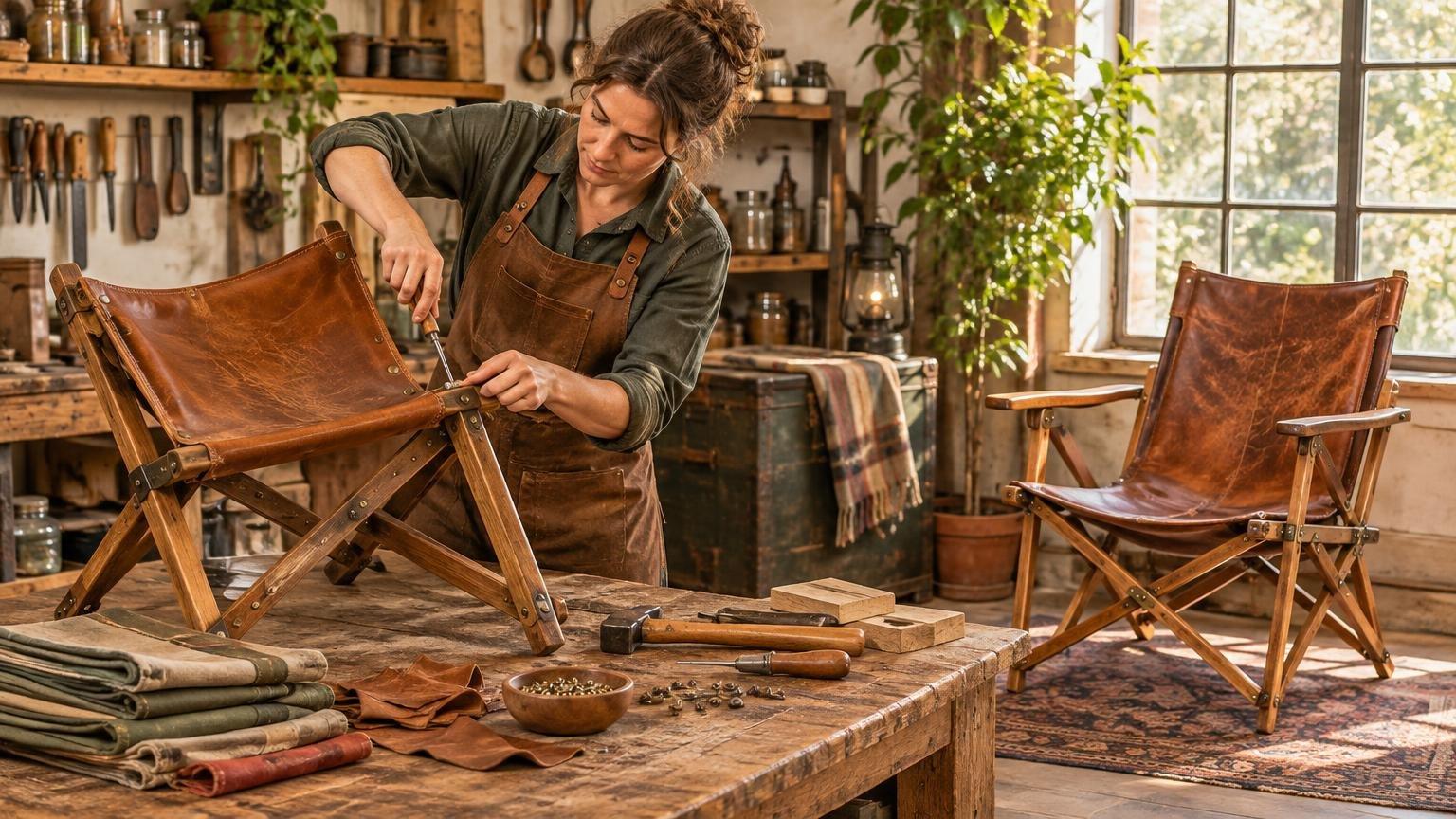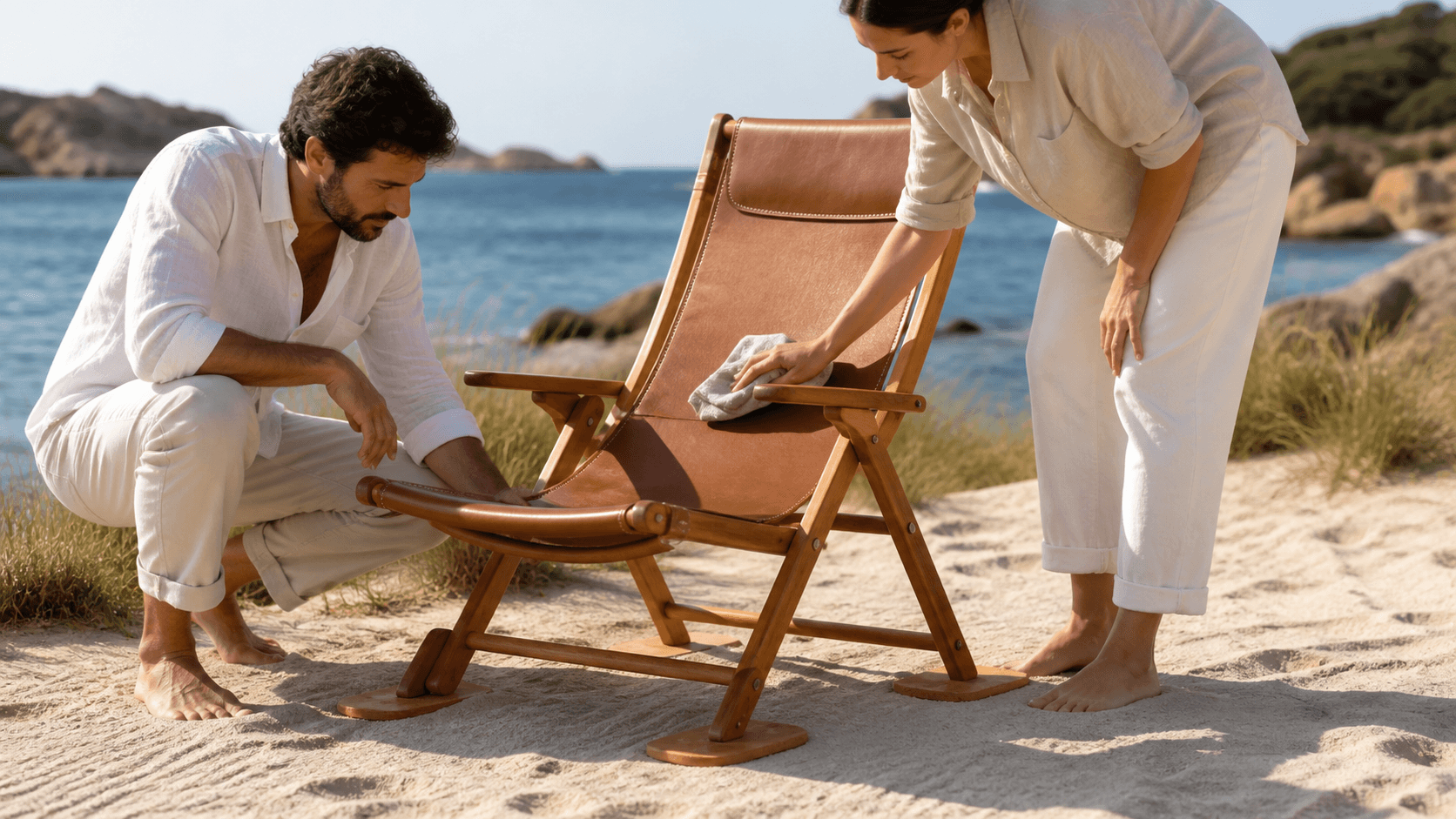
A nice beach chair should feel good the moment you sit down and still feel good years from now. When we think about the perfect chair, we think about crisp air, quieter beaches, and long walks with the sun low on the water. Off-season days are the best time to slow down, pay attention to what actually feels comfortable, and plan ahead before the rush of warm weather and crowded shorelines returns.
Most of us have owned the same kind of beach chair at some point: low to the ground, wobbly in the sand, rusty by the end of summer. Hinges squeak, fabric stretches, legs sink and tip. It does the job for a little while, then ends up in the trash. That pattern is exactly why we like using a simple comfort checklist. When you look at seat height, sand stability, salt resistance, and real material longevity, it becomes clear which chairs are made to be tossed and which are made to be kept. Our own folding chairs are built around that long-view idea, with solid oak and leather that feel just as at home on a deck or by a firepit as they do on the beach. Let us walk through how to use this checklist so your next chair becomes a long-term companion, not a one-season regret.
Designing a Beach Chair You Will Love for Years
When we design or choose a nice beach chair, we are really asking one big question: will this still feel good after many tides and many summers? To answer that, it helps to think past bright colors and cupholders for a moment.
Here are the big comfort checkpoints that matter most over time:
- Seat height that fits your body
- Stable legs that stay steady in soft sand
- Materials that can handle salt and sun
- A folding design that is both portable and durable
Once you see chairs through this lens, cheap options start to look different. You notice thin metal tubes, stiff plastic joints, and fabric that already feels stressed. Then you notice other chairs that seem simple at first glance, but have real weight, thoughtful angles, and materials that feel calm and solid in your hands.
Dialing in Seat Height for Beachside Comfort
Seat height might sound boring, but your knees and hips will disagree. If the seat is too low, you end up rolling onto your side or pushing on your thighs just to stand up. Too high, and your feet barely press into the sand, which can make you feel off balance.
We tend to think in terms of a comfort sweet spot:
- Low loungers are great if you want to stretch out close to the ground
- Mid-height chairs feel easier on joints and better for long sits
- Taller seats can work well on harder surfaces, like decks or patios
Many people find that a slightly higher seat makes it easier to get up, especially after a long nap with a book. When a beach chair feels more like a supportive accent chair than a flimsy camp stool, your back and hips can relax. That height also lets one chair move from sand to porch to living room corner without feeling out of place. Some chairs offer adjustable legs and moving pieces, but those parts can wear out first. A well-designed fixed-height chair, built from strong, honest materials, often gives better long-term comfort with less to break.
Building Sand Stability That Will Not Sink or Tip
Sand is always shifting. Put weight on a tiny point and it sinks. Spread that weight out and things stay level. That simple idea shapes how a stable beach chair should be built.
Look for details like:
- Legs with broader feet, not tiny points
- Slightly angled legs that plant into the sand, instead of standing straight and stiff
- Crossbars that link legs and share your weight across a bigger area
Super light chairs can feel great in your hand but wobbly under your body. A little more substance, with a balanced frame, often feels safer without becoming a burden to carry. The real test is how a chair feels when you shift, twist to grab a drink, or lean to talk to someone on a towel beside you. A good frame will not twist, rattle, or leave you nervous. That same structure should feel steady on packed sand, loose dunes, wooden boardwalks, and backyard grass. When we build in solid oak with careful joinery and quality hardware, we are aiming for that grounded feeling even when the earth under you moves.
Choosing Salt-Resistant Materials That Age Gracefully
Beach air is beautiful, but it is also hard on objects. Salt hangs in the breeze, settles into joints, and speeds up rust. Fabric can fade and weaken. Cheap plastics dry out, go chalky, and crack.
We think about it this way:
- Hardwoods like oak can be finished for outdoor strength and can be refinished later
- Genuine leather will patina, softening and deepening in tone, instead of peeling
- Marine-grade or stainless hardware helps avoid rusty hinges and streaks
Synthetic fabrics and plastics can still make sense for some uses, especially if you need something you do not mind getting rough. But when you want real comfort and a chair you can repair, wood and leather give you a longer runway. A simple routine after a beach day helps a lot. Rinse off salt spray, let the chair dry fully before folding, condition leather from time to time, and give hardware a quick seasonal check.
Our own philosophy is to start with materials that actually like to age. We want chairs that show where they have been, with wood that warms over time and leather that tells quiet stories in its grain, instead of turning into something you want to hide in the garage.
Balancing Portability with Heirloom Quality
There is always a tension between easy to carry and built to last. Many portable beach chairs feel almost disposable. On the other hand, nobody wants a heavy, bulky seat that is hard to lug across soft sand or load into a small car.
Ideal portability looks like:
- A fold that feels natural and smooth
- A slim shape that fits in a trunk or closet
- Weight that feels solid in your hand but still manageable for most adults
Craftsmanship matters here. Joints that are reinforced instead of just pressed together, folding parts that move smoothly without grinding, and hardware that does not loosen after a few seasons all help a chair keep working, year after year. A good folding chair should move easily from beach to campsite to living room when you have extra guests. When the design still feels special five or ten seasons from now, that is emotional durability. You are not just keeping it because it still works, you are keeping it because it still makes you happy.
Turning This Checklist Into Your Next Beach Upgrade
At this point, the beach comfort checklist is simple to remember:
- Seat height that lets you sit and stand without strain
- Stable legs that stay steady on soft or uneven sand
- Salt-resistant materials that can age with grace, not crumble
- A folding design that is easy to carry but built to last
Take a look at the chairs you already own. Which ones are wobbly? Which have rusted spots, sagging fabric, or joints that feel rough? Instead of stacking more of the same in a shed, you might choose to replace several weak pieces with one heirloom-level chair that can move through many seasons with you. Fall and early winter are a smart time to do that. The beaches are calmer, schedules are a bit slower, and you can pay attention to real comfort instead of grabbing the last chair left on a crowded store shelf. When you use this checklist as you shop, you are choosing more than a nice beach chair. You are choosing a piece that will sit by the ocean with you again and again, growing more familiar and more yours every year.
Upgrade Your Beach Days With Customized Comfort
Bring your brand, message, or favorite design to the shoreline with a custom print on a nice beach chair that is both comfortable and memorable. At ImImprint, we combine quality materials with precise printing so your chairs look great and hold up to real use. We will guide you through each step, from design ideas to final production, so your order arrives exactly as you envisioned it. Get started today so your next beach day or event is ready with seating that stands out for all the right reasons.