Decode the Details That Separate Ordinary From Heirloom
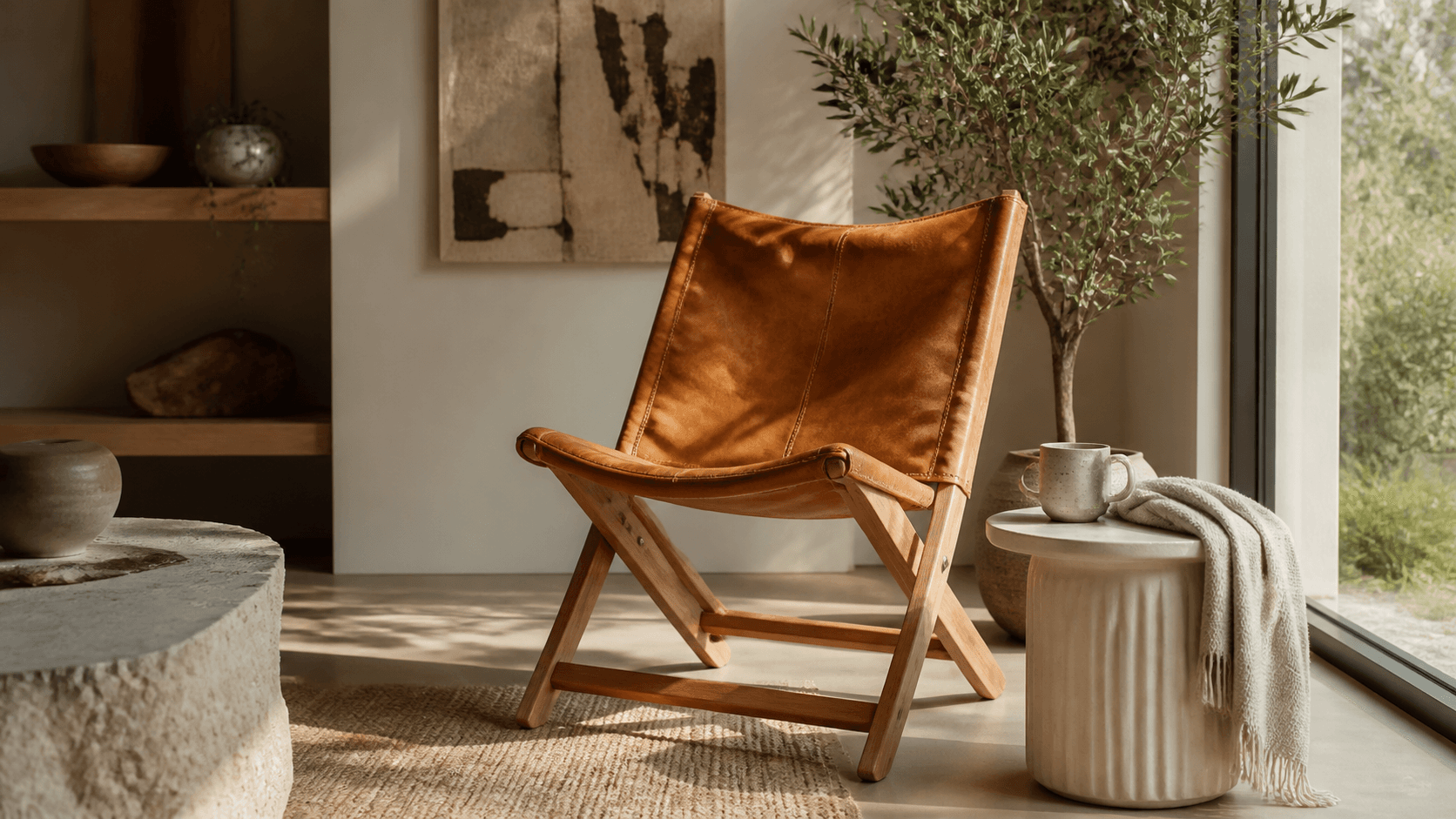
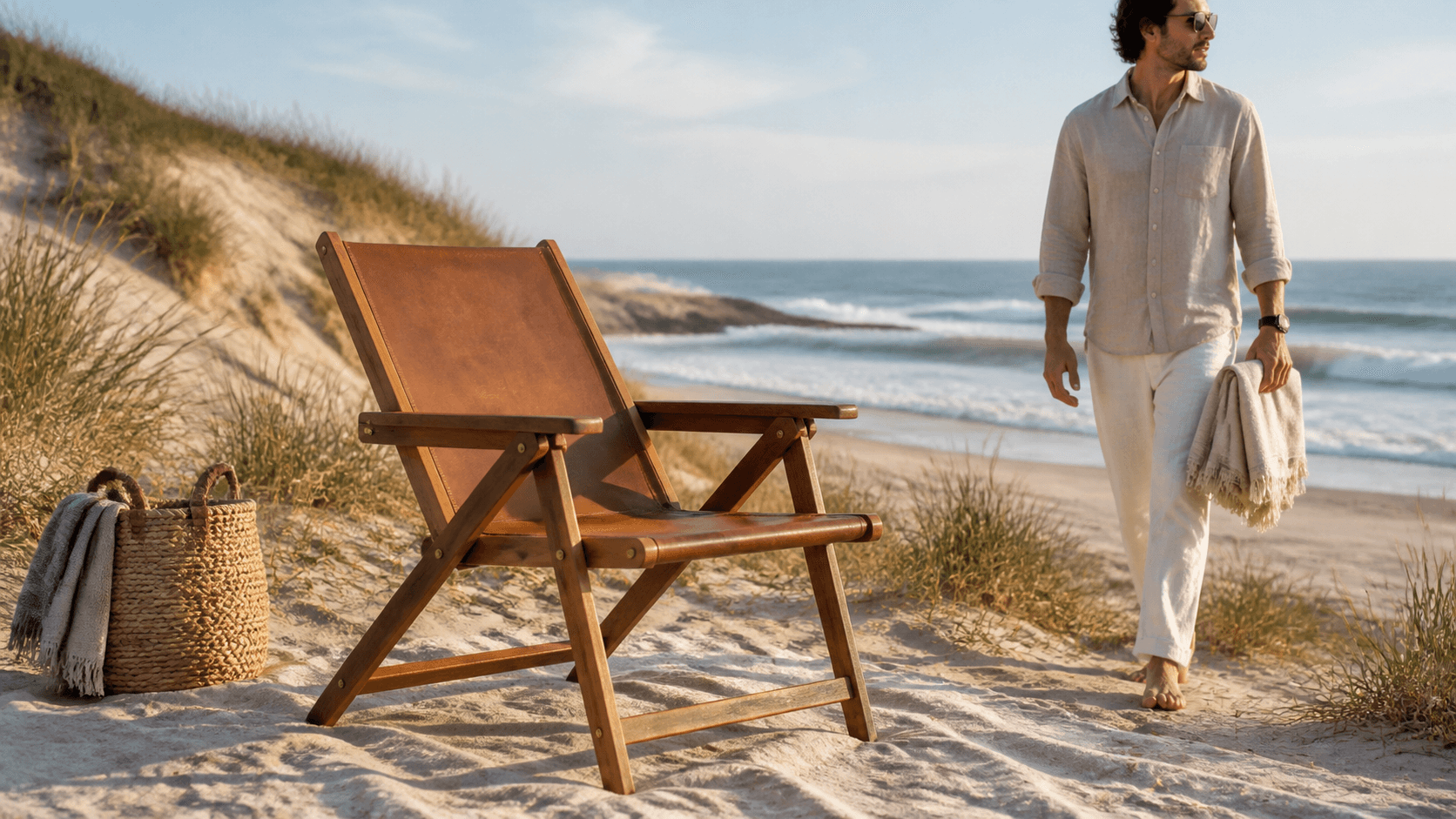
A premium handmade folding chair should feel different the second you touch it. The weight, the way it opens, the way the leather gives under your hand, all of that tells you if it will last through years of porch hangs and backyard dinners or fall apart after one season. When we build, we think about how something will look after a thousand sits, not just on the day it ships.
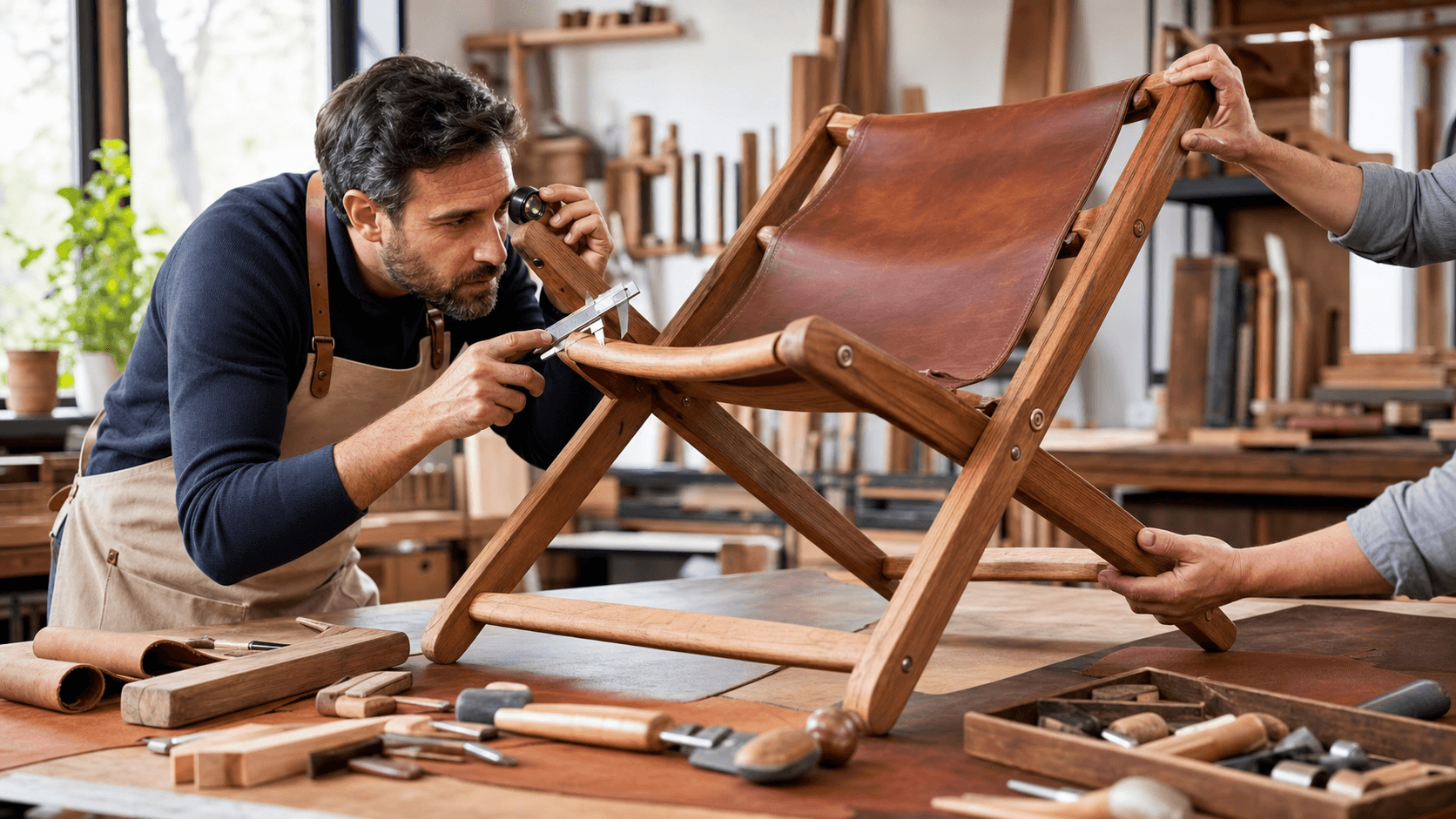
That is why it helps to know what to look for. By breaking a chair into its key parts, you can see past marketing words and pretty photos. We will walk through frame geometry, hardware tolerances, finish systems, and leatherwork so you can tell a throwaway prop from an heirloom piece built to age with your home, especially during long summer evenings outside.
Frame Geometry That Feels Effortless and Lasts Decades
Strong, smart frame geometry is the backbone of any premium handmade folding chair. When it is done right, the chair feels steady even on a stone patio or a slightly warped deck. The load should travel cleanly down through the legs and crossmembers, not twist across the frame.
Here is what to look for as you sit and stand a few times:
- No side-to-side wobble when you shift your weight
- Legs that stay in contact with the ground instead of rocking
- Crossmembers that feel tight, not springy or bendy
Comfort matters just as much. A good folding chair should not force you into a stiff perch. For long summer hangs:
- Seat height that lets your feet rest flat
- A gentle back angle that supports your lower back
- Enough seat depth so your thighs feel supported without cutting into the back of your knees
Then there is the wood itself. Solid oak is a workhorse for this kind of chair. Its density and grain give great screw-holding strength, which keeps joints tight. Watch for:
- Straight, clean grain on load-bearing parts like legs and rails
- Joinery that looks intentional, not just a pile of metal brackets
- Details like through-tenons, tight dowel joints, or reinforced pivot blocks
When you open and close the chair, joints should feel like one connected structure, not a loose puzzle of parts.
Hardware Tolerances You Can Hear, See, and Feel
Hardware is where you can really sense quality. Start with what we like to call the quiet test. Open and fold the chair a few times. High-end brass hardware should move in a smooth arc without squeaks or grinding.
Pay attention to:
- Pins and screws that do not wiggle in their holes
- A steady, consistent resistance as the chair folds
- No sudden clicks or pops as weight shifts
Then look close. Hardware that is fitted well will have tiny, even gaps and clean alignment.
Check for:
- Hinges that sit flush with the wood, not proud or sunk too deep
- Screw heads seated neatly, not chewed up or at odd angles
- Matching hardware throughout, not a mix of colors or metals
Solid brass is more than just a pretty material. It handles humidity, sweat, and sea air better than many plated metals. Over time it will darken and pick up a rich patina that works beautifully with aging oak and leather, instead of flaking or rusting.
Finish Systems Built for Sun, Shade, and Seasons
A premium finish is a full system, not one quick spray. On a quality folding chair, the wood should be sanded through fine grits so it feels smooth to the touch. Then comes oil or stain, sealer, and protective topcoats, each done with care.
You can often tell by feel more than by shine:
- Does the surface feel like real wood, not plastic?
- Can you see and touch the grain, or is it trapped under a thick shell?
- Does the finish wrap into edges and corners, or stop short?
For outdoor and indoor-outdoor living, you want a finish that can handle UV, spilled drinks, and sticky summer air. Thick glossy coatings can look nice on day one but often crack or peel. A hand-rubbed system is usually thinner and more flexible, so it moves with the oak instead of fighting it.
Good finishes also let you refresh over time. Light sanding and a fresh coat should bring the chair back to life. If a finish turns cloudy, chips in big sheets, or flakes when bumped, it is not built for decades of use.
Leather Tanning, Edge Work, and the Comfort of Patina
On a premium handmade folding chair, the leather is not just an accent, it is a working surface. Full-grain, vegetable-tanned leather will show natural markings and slight color shifts. That is a sign of real hide, not a glued-together mix.
Look and feel for:
- A dense, slightly firm surface that softens with warmth
- Subtle pull-up color when you bend the leather
- Natural pores and small variations, not a plastic film on top
Edges tell you a lot about the maker. High-quality edge work should be:
- Beveled so they feel smooth under your fingers
- Burnished until the fibers lie flat and glossy
- Waxed or sealed so they do not fuzz or shed
Breathability is another gift of good leather. On hot days, a real leather seat will still feel comfortable and will slowly shape to your body. Over time it will darken and pick up character instead of cracking or peeling away from its backing.
A Simple Scoring Rubric for Your Next Chair Purchase
When you are in a store or unpacking a delivery, it helps to have a quick way to judge what you are holding. Try giving each of these a 0 to 5 score, where 0 is poor and 5 is excellent:
- Frame geometry and stiffness under load
- Hardware tolerances and smooth motion
- Wood quality and finish feel
- Leather quality and edge work
- Overall proportional design and comfort
Do a basic field test. Open and close the chair three times. Sit, lean back, and rock gently side to side. Run your fingers along every edge, joint, and piece of hardware. Listen for creaks, feel for sharp corners, and look for misaligned parts.
When you add up your scores, you will see quickly if you are holding a short-term placeholder or something that can live with you for years. A true heirloom-grade folding chair, like the solid oak, leather, and brass pieces we build at ImImprint, should earn strong marks across all five areas and feel better every time you sit down.
Elevate Your Seating Experience With Lasting Craftsmanship
Choose comfort and quality that reflects your style with our thoughtfully crafted Premium handmade folding chair. At ImImprint, we carefully design every detail so your seating is both practical and beautifully made. Whether you are updating your home, studio, or event setup, we are ready to help you find the right fit. Bring home a chair that feels as good as it looks and is built to serve you for years.