Sit All Day, Stay Outside Longer
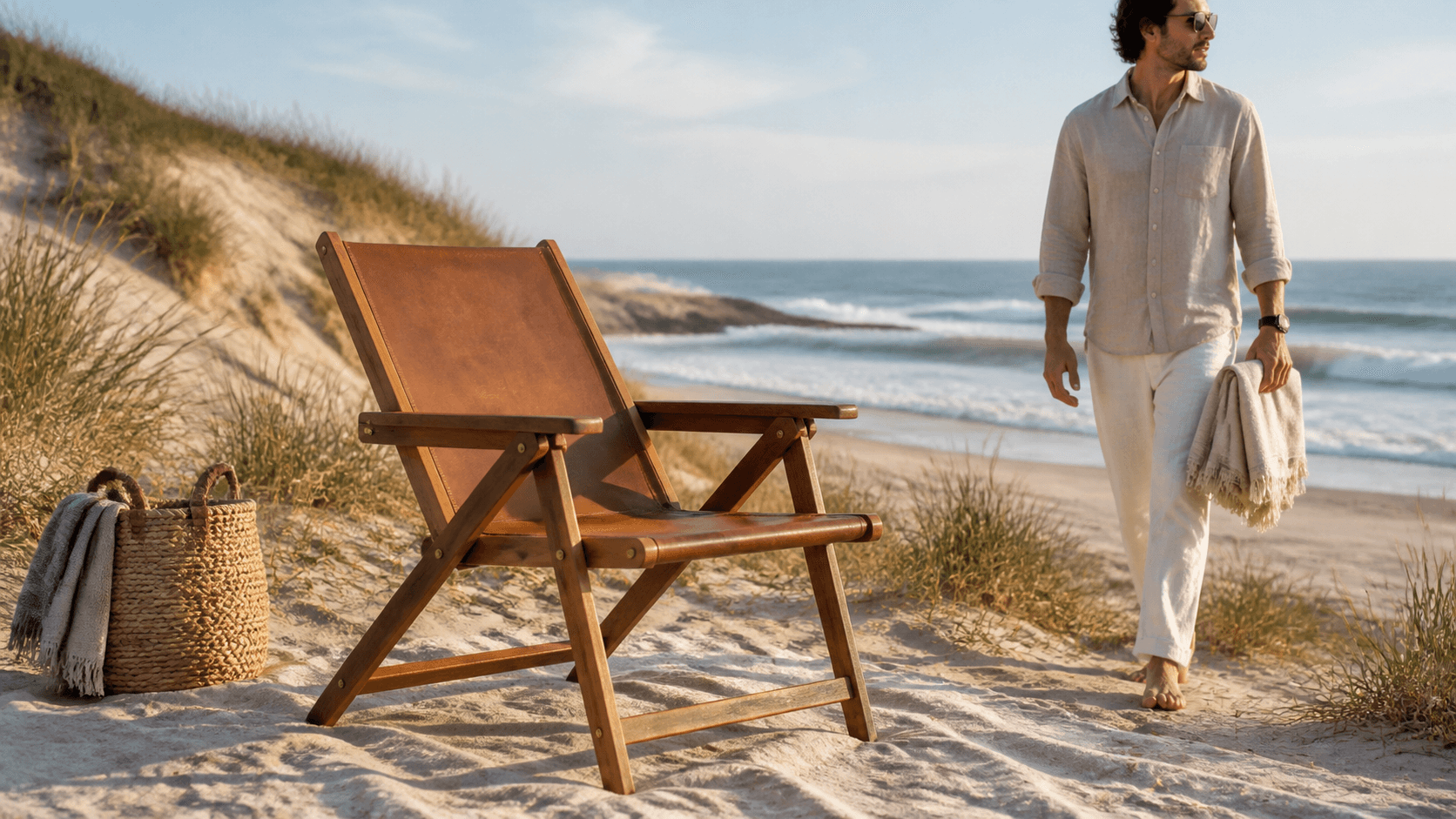
A natural material camping chair can completely change how long you stay outside. When your seat is easy on your back and hips, you are far more likely to linger from that first mug of coffee to the last spark of the campfire. Comfort is not just a nice extra; it shapes how you use your day.
Peak summer camping often means long stretches in one spot. You hang out at the picnic table, slide your chair closer to the fire, then drag it over into the shade. If the chair cuts into your legs or sags in the middle, you start squirming, then you head inside. With a chair designed for all-day sitting, you keep choosing the outdoors.
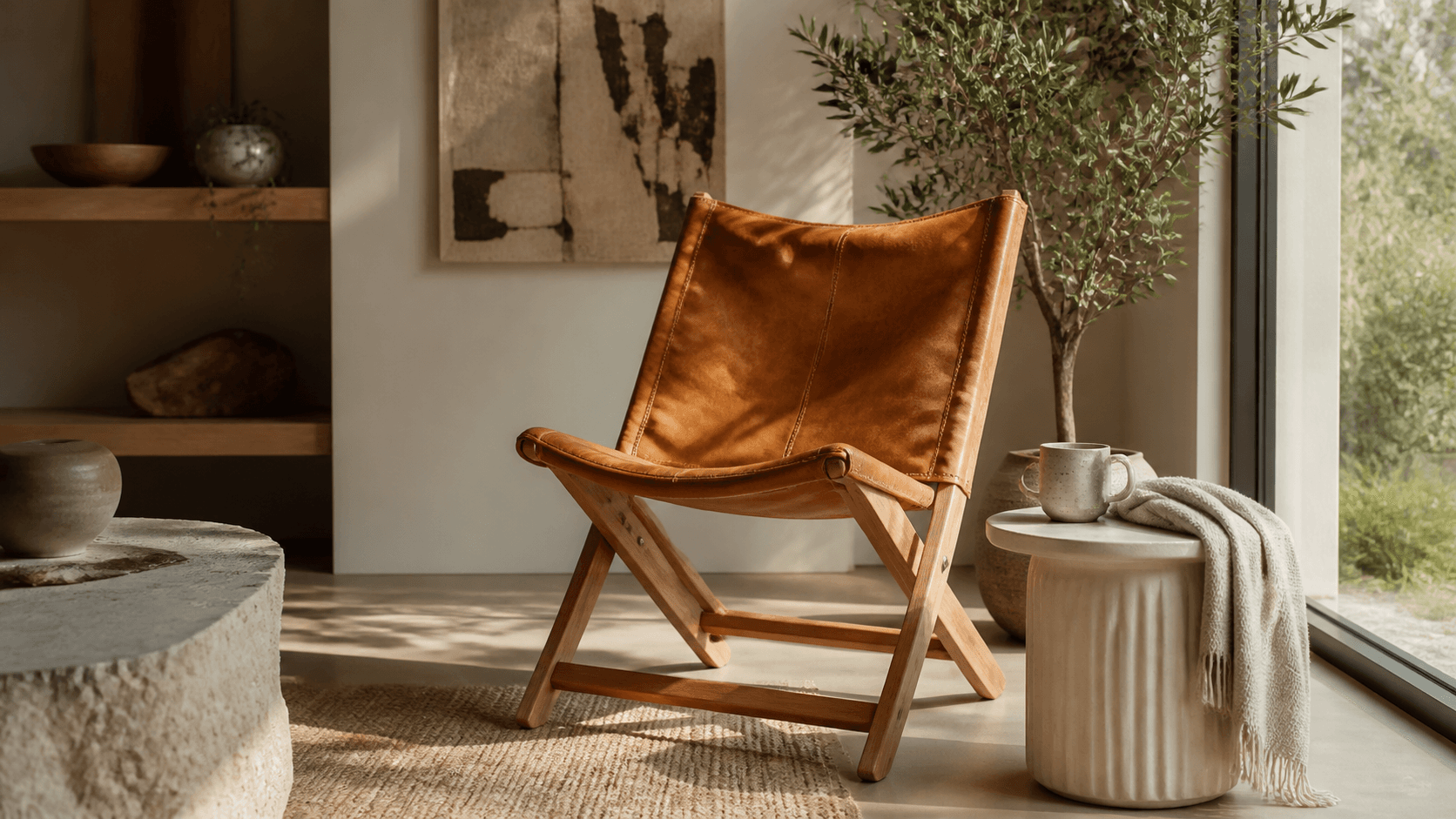
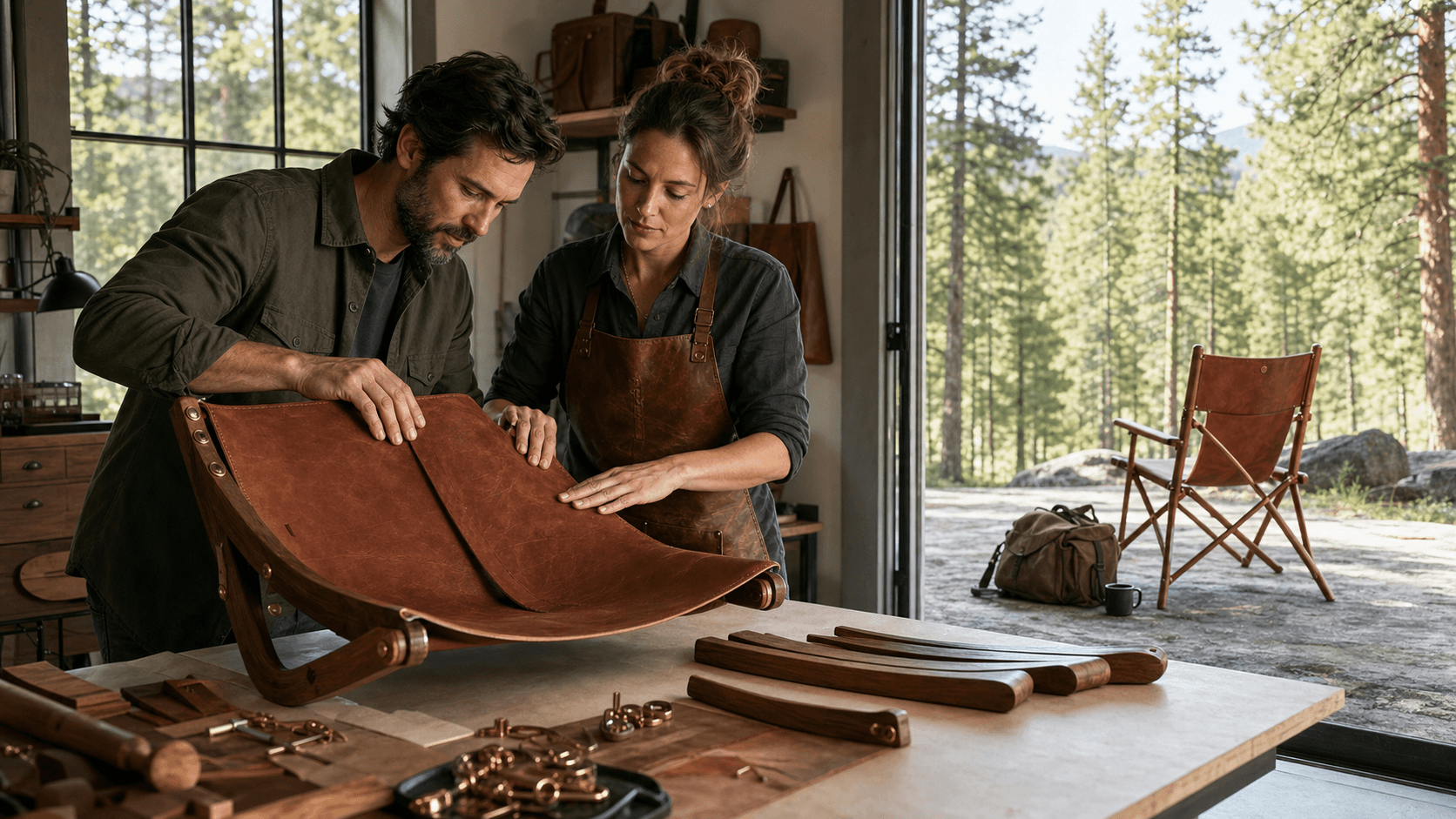
We are big believers in gear that does more than one thing. A good natural material camping chair should feel just as right under tall pines as it does by a living room bookshelf. Built with solid oak, genuine leather, and brass hardware, the goal is simple: a folding chair that ages well, travels well, and never feels temporary.
Why Natural Materials Feel Better All Day
Plastic and thin nylon might be light, but they often feel harsh after an hour or two. Natural materials like oak and leather meet your body in a softer, more forgiving way. They spread out pressure so you are not resting all your weight on a few tight straps or a hard bar.
Natural materials also help you stay at a comfortable temperature. Leather slowly warms to your body, instead of shocking you with a cold surface or turning sticky in the sun. Oak feels steady under you. It does not get clammy in cool night air or scorching hot when the sun swings over your campsite.
All-day comfort is more than what your joints feel; it is also about your senses. Sitting in a chair made of real wood and leather can be quietly calming. There is no sharp plastic smell, no loud squeaks, and no itchy fabric edges. You get small, pleasant details instead, like the gentle sound of wood settling when you lean back.
Natural materials support relaxation by giving your body and your mind fewer things to fight. That means:
- Less pressure on hips and shoulders
- Fewer sticky or sweaty spots in humid weather
- No harsh edges cutting into the backs of your legs
- A calmer, more grounded feel while you sit
When you are not distracted by discomfort, you can actually enjoy the view, the book, or the conversation in front of you.
Building Comfort Into Every Inch of the Frame
A natural material camping chair is only as good as its frame. Comfort starts with how your body lines up when you sit down. The backrest needs the right angle so your spine can relax, your shoulders can drop, and your head can rest without you craning your neck forward. Too upright, and you feel like you are at a desk. Too far back, and you feel like you are sliding out.
Seat depth matters too. A seat that is too short cuts into the backs of your thighs. One that is too deep can pull your lower back into a slump. A well-designed chair gives enough room to support your legs, while still letting your feet rest flat for healthy circulation.
Solid oak helps here by offering firm, steady support. Unlike some metal frames that flex and twist, oak holds its shape. That solid feel keeps you from slowly sinking into a curve that strains your lower back. At the same time, a good folding design should stay stable, even on a bumpy campsite.
Thoughtful hardware and joinery are key parts of comfort you may not see at first glance:
- Brass hardware placed where it will not brush your skin
- Joints that lock in cleanly so you do not feel wobble when you shift
- Smooth edges that will not snag your clothes
- A fold pattern that keeps your fingers away from pinch spots
When the frame is dialed in like this, you can scoot closer to the fire, shift sideways to talk, or pull your knees up for a while, all without the chair fighting back.
Leather That Learns Your Shape Over Time
One of the best parts of a natural material camping chair is the leather seat and back. New leather starts out supportive, then slowly molds to your body. With each weekend outside, it remembers where your weight lands and where you need just a bit more give.
Over time, this creates a memory fit that feels personal. The leather stretches just enough, not in a saggy way, but in a way that cradles your hips and supports your lower back. The chair starts to feel like it was made for you, because in a way, it slowly was.
Leather also handles real summer conditions well. It breathes, which helps with:
- Humid air near lakes and rivers
- Warm campfire evenings
- Light perspiration on hot afternoons
- Quick shifts from sun to shade
Instead of trapping moisture against your skin, leather lets air flow and dries naturally. It feels steady and dry, even when the weather is working hard.
As trips add up, leather builds character. Small scuffs from a gravel site, a bit of sun from those long golden hours, the gentle darkening where your hands grab the arms, all of it blends into a rich patina. These marks feel less like damage and more like a record of everywhere the chair has been with you.
From Campsite to Living Room Without Missing a Beat
A well-designed natural material camping chair should not have to live in storage. Oak, leather, and brass look right at home outside, but they also fit easily into daily life indoors. The same chair that watches poolside snacks can slide next to a reading lamp or tuck by a fireplace when the weather cools.
Good looks are just one side of it. Portability matters too. A thoughtful folding chair needs:
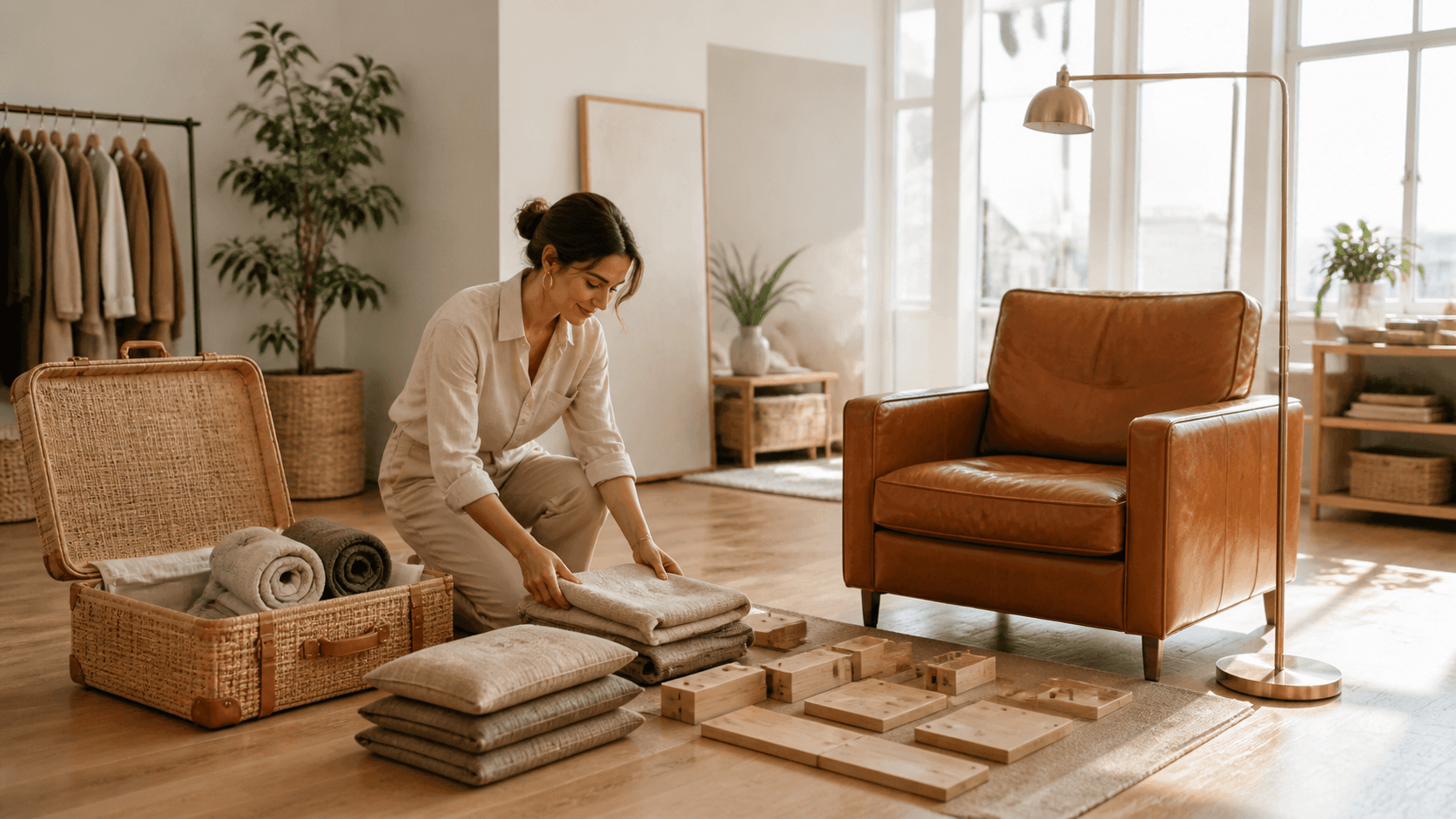
- A compact fold that fits in a trunk or closet
- Balanced weight that feels solid but still carryable
- Clear grab points so you can lift it with one hand
- A shape that slips through doorways and between parked cars
With that kind of design, moving from car to campsite, or porch to living room, becomes simple. You are more likely to use something every day if it is easy to move and easy to set up.
That is where year-round value really shows. Instead of being "summer-only" gear, a natural material camping chair can become a daily seat. It can live on a balcony with morning coffee, then shift inside as a favorite corner chair in cooler months. One piece, many uses, always ready for a long, comfortable sit whenever you want to stay outside just a little longer.
Upgrade Your Campsite Comfort With Sustainable Seating
Choose gear that feels good to use and good for the planet with our thoughtfully designed natural material camping chair. At ImImprint, we focus on quality craftsmanship so your outdoor seating is durable, comfortable, and easy to pack. Explore our collection today to find the chair that fits your camping style and values. We are ready to help you make your next trip more comfortable and more sustainable.