Why Some Chairs Instantly Feel More Comfortable
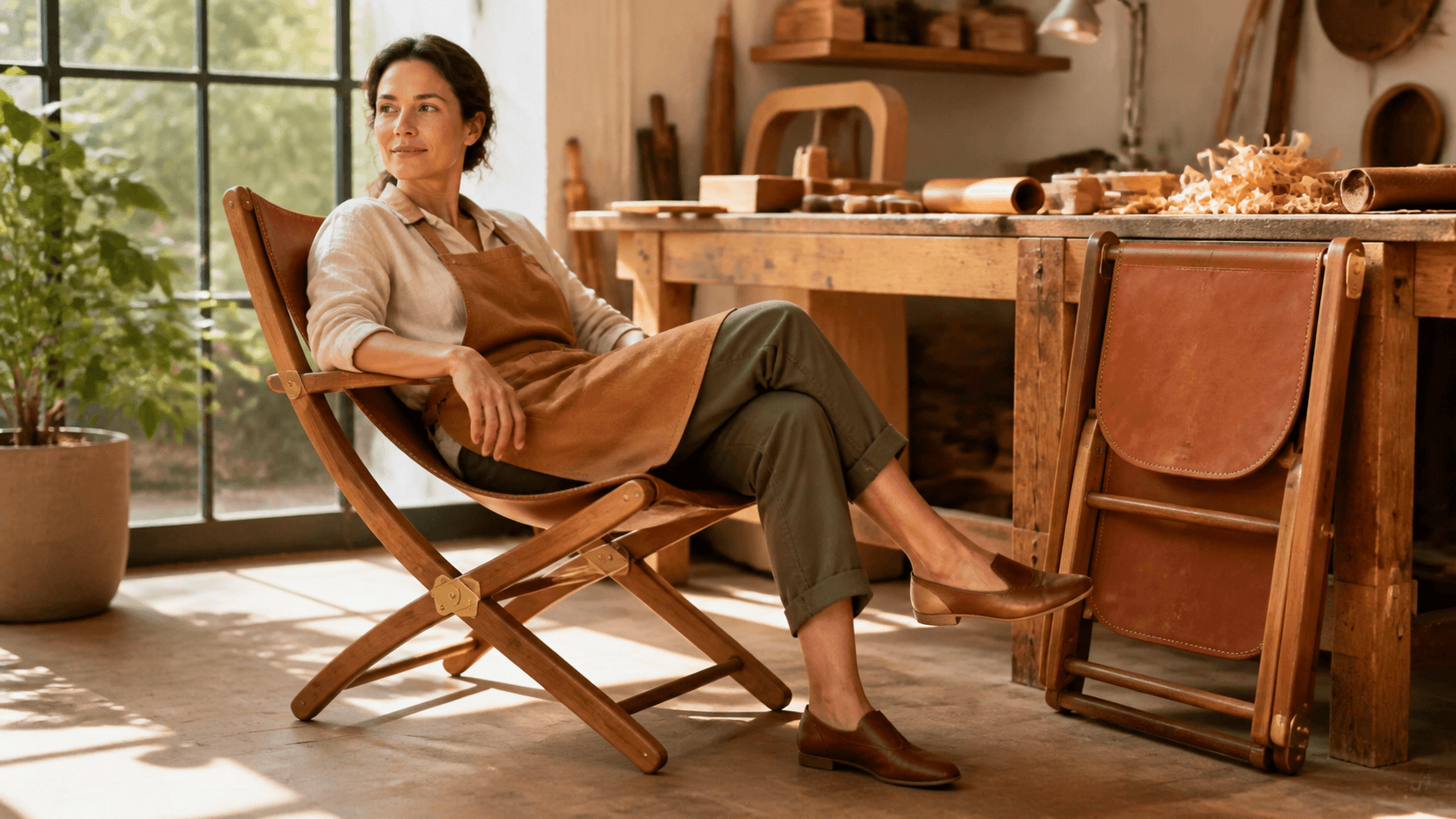
Some chairs feel right the second you sit down. Your shoulders drop, your back settles, and you think, "I could stay here for a while." You might not know why, but your body can tell. That feeling is not just about looks; it is about how the chair quietly supports every small part of you.
We like to call this micro-ergonomics. It is the collection of tiny design choices that shape how your body feels over minutes and hours, not just the first few seconds. The angle of the seat, the bend of the backrest, the way the front edge meets your legs, all of these details decide whether you relax or start fidgeting.
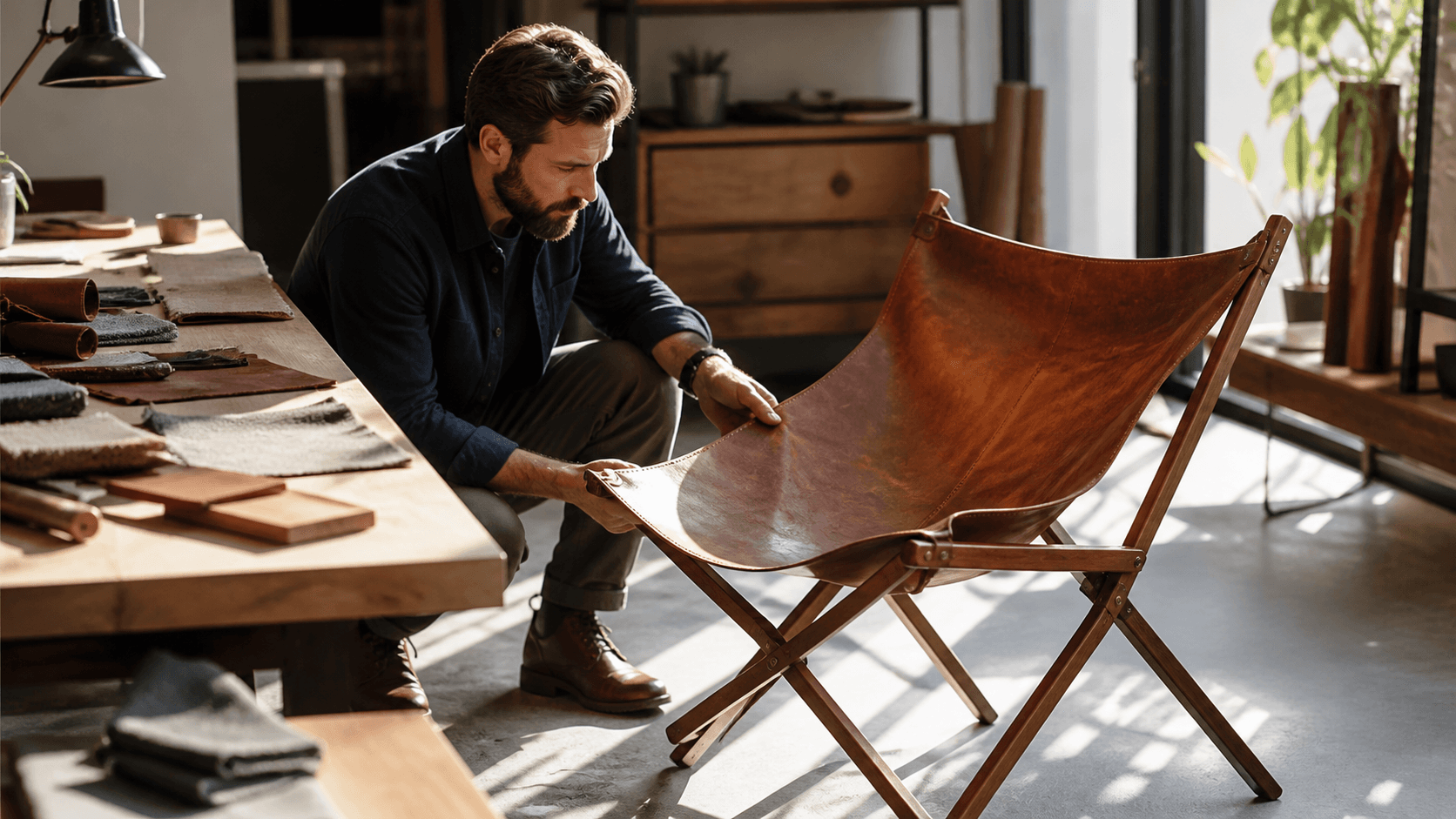
A premium handmade folding chair is not only prettier or stronger. It feels better because of how it flexes, cradles, and spreads your weight. When oak and leather are shaped by hand, comfort is built in at the craft level, not just at the styling level. As fall gatherings, tailgates, porch hangs, and holiday weekends pile up, that comfort starts to matter more than we expect.
The Science of Micro-Ergonomics in Folding Chairs
Micro-ergonomics sits where body mechanics and small design choices meet. A folding chair may look simple, but it has a lot going on in how it supports you. Every angle and curve changes the way your spine stacks, how your hips rest, and how your legs and shoulders feel over time.
Seat angle is one of the biggest hidden players. A slight tilt helps your pelvis tip in a way that supports the natural curve of your spine. When that angle is off, you feel it as:
- Slumping or sliding forward
- A flat lower back that starts to ache
- Constant shifting to find a "sweet spot"
When the backrest is set at a friendly angle and height, your shoulders can relax instead of rounding. A gentle curve can give the feeling of a soft hug between the shoulder blades, which helps your neck stay longer and easier. Even your breathing can feel deeper when your chest is not collapsed.
The front edge of the seat is another key area. If it is too sharp or too high under the thighs, it can press into the backs of your legs. That cuts into circulation and brings on numbness or pins and needles. A rounded, slightly dropped edge spreads pressure and lets blood flow more freely.
Handmade construction matters here. A craftsperson can sand, shape, and adjust by feel, and then actually sit in the chair to test small changes. Those tiny refinements are hard to hit in a fast, high-volume factory flow.
How Flex and Materials Change the Way You Sit
Think about the feel of a rigid metal or plastic folding chair. It holds you up, but it does not really meet you where your body is. There is no give, no response, just a fixed shape you have to fit yourself into.
Now compare that to solid oak paired with leather. A premium handmade folding chair made with these materials behaves more like a simple suspension system. The frame stays stable, but it is not harsh. The wood has a gentle flex, and the leather has a bit of stretch; together they move with you instead of against you.
Here is what that controlled flex can do:
- Adjust to different body shapes without big gaps or hot spots
- Spread pressure across your hips and back, instead of a few sharp points
- Let you shift positions without squeaks or jolts
Natural materials play a big role. Oak has grain that lets it give a little under load, then return to shape. Leather slowly adapts to you, building a "seat print" over time. Each sit makes the chair feel more familiar, which is a quiet kind of luxury.
This kind of feel is not easy to fake on the cheap. It depends on careful picking of boards, how joints are cut, and how the leather is tensioned, all handled closely by human hands.
Weight Distribution and the Hidden Art of Support
When you sit, your weight does not just land in one spot. It travels from your hips and thighs into the seat, then into the frame, down the legs, and finally into the ground. The path that weight takes changes everything about how sturdy and calm a chair feels.
In a common low-cost folding chair, a lot of pressure gathers in a few stressed places: a skinny tube, a noisy hinge, a thin seat panel. You feel that as wobble, creak, and that tiny sense that the chair might not love sudden moves. Your body reacts by staying slightly tense, using small muscles to keep balance, even if you do not notice it right away.
A premium handmade folding chair treats load more gently. With thoughtful joinery and smart geometry, the frame shares weight across multiple members instead of punishing one weak link. Details like leg angle and cross-bracing help:
- Reduce side-to-side wiggle
- Keep the chair from twisting on soft ground
- Make sitting feel calm, even when you shift or lean
Seat width and depth matter here too. A seat that supports most of your thigh, without digging into your knees or pulling you away from the backrest, spreads your weight more evenly. Solid oak, built with care, can handle kids climbing in, adults settling back with a blanket, or uneven patio stones without complaining.
Why Handmade Design Matters More Outdoors and on the Go
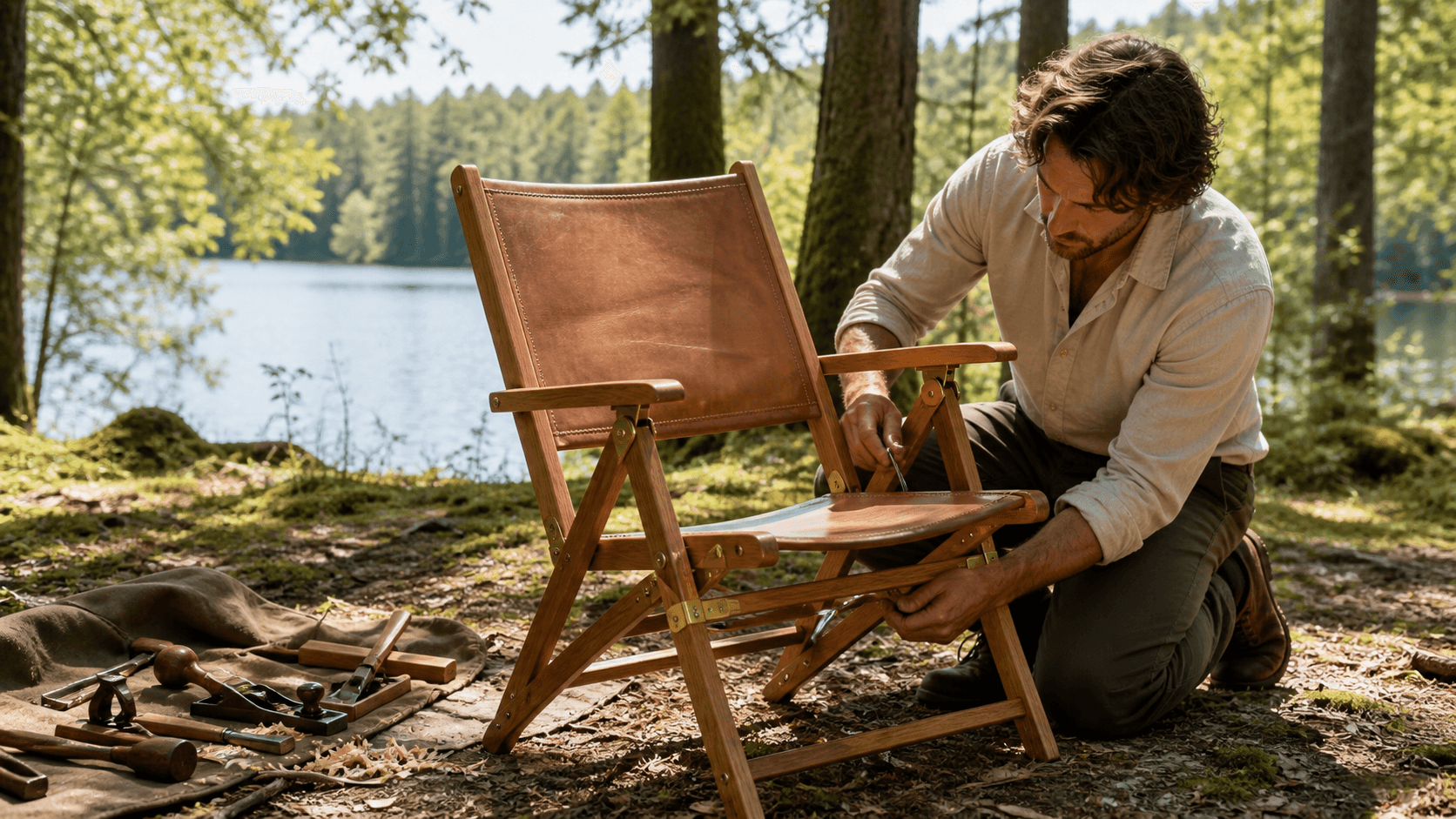
Portable chairs work the hardest when the seasons change. Fall camping trips, backyard fires, tailgate days, and holiday overflow seating all ask the same thing: be easy to move, but not punishing to sit in. Outdoor use brings uneven ground, changing temps, and longer stretches of sitting while you talk, snack, or watch the game.
All those small ergonomic choices matter even more outside. A chair that plants its legs well, keeps you from sliding, and lets your back rest naturally can turn a chilly, long night around the fire into something you remember fondly. A handmade folding chair built with real wood and leather can feel:
- Stable on grass, gravel, or a deck
- Comfortable with or without a cushion
- Supportive whether you are in a big coat or light layers
Portability does not have to mean flimsy. Thoughtful weight, balanced carry points, and a compact fold can live together with solid oak and strong joinery. When the chair unfolds into a space that welcomes your body, it becomes part of the experience, not just a place to park for a few minutes.
When all of this comes together, the result is comfort you can feel every time you sit down. The micro-ergonomics, the quiet flex of wood and leather, and the smart path your weight follows through the frame turn a simple folding chair into a trusted piece you reach for again and again, indoors and out.
Upgrade Your Space With Thoughtfully Crafted Seating
Bring comfort, style, and lasting quality to your next gathering with a premium handmade folding chair designed to look good and feel even better. At ImImprint, we carefully select materials and finishes so your seating complements both everyday use and special events. Explore our collection to find pieces that match your aesthetic and performance needs. Let us help you create a seating setup that feels intentional, welcoming, and built to last.