Why the Cheapest Chair Often Costs You More
Summer rolls in and the calendar fills up fast. Camp trips, backyard cookouts, outdoor concerts, kids' games, long weekends at the lake. Most of us grab another cheap camp chair at the store, toss it in the trunk, and call it good. It feels easy in the moment, but that quick choice can cost more than we think.
A better way to look at chairs is cost per use. Not just what we pay at checkout, but what each sit actually costs over years of summers. On one side, we have disposable camp chairs with thin metal frames and synthetic fabrics. On the other hand, an artisan folding chair made from natural wood and genuine leather, designed to age and travel well. We will compare lifespan, repairability, resale value, comfort, and the full cost of ownership so your next summer chair is one you feel good about, season after season.
Lifespan Showdown: One Season vs. One Generation
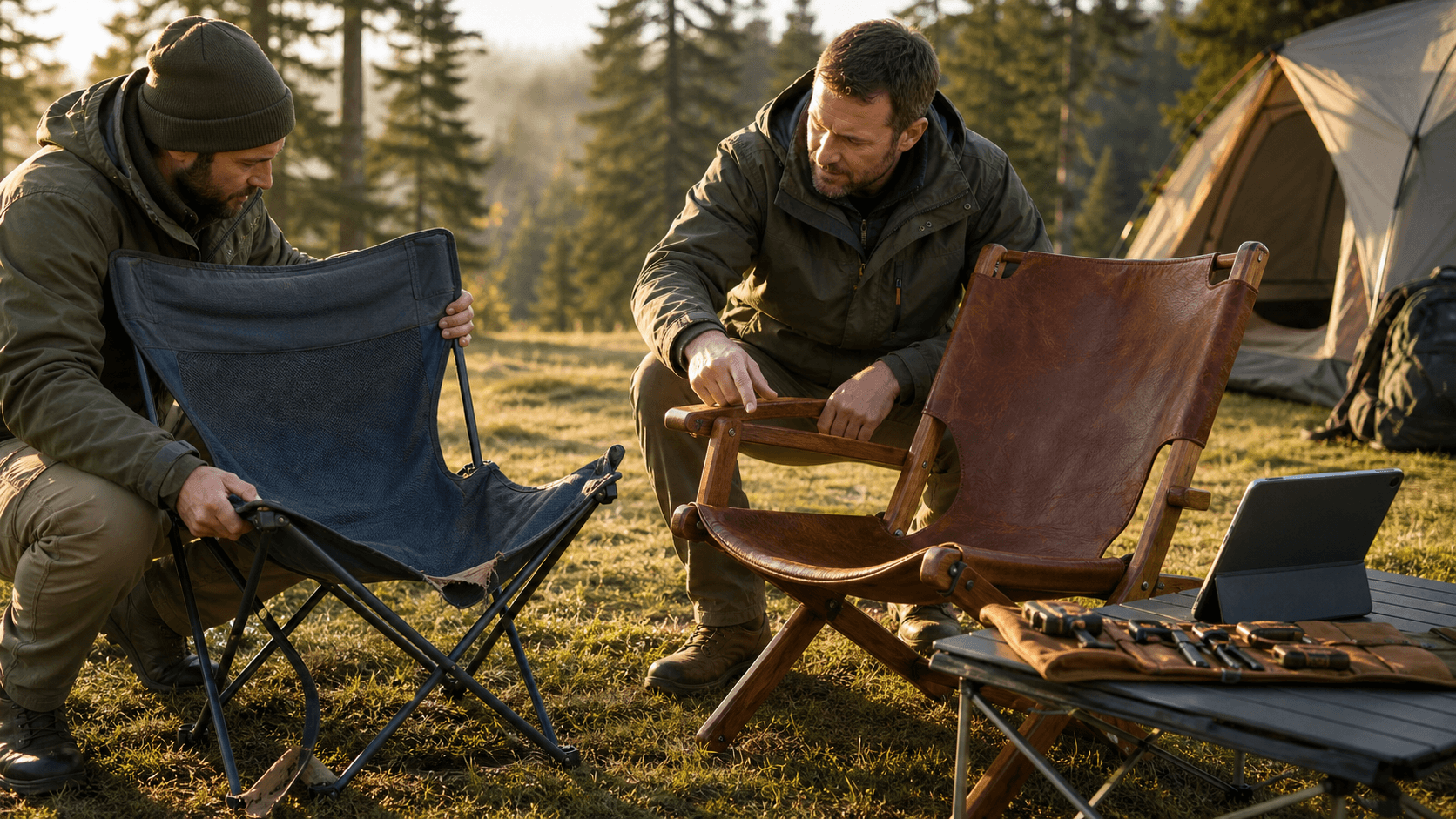
Most low-cost camp chairs are built for a short life. After a few hot afternoons, the fabric starts to sag. The joints feel looser. Maybe one leg bends a little in soft ground. Sometimes the bag rips, the hinge locks up, or the stitching starts to fray. Many people end up tossing at least one of these chairs every summer.
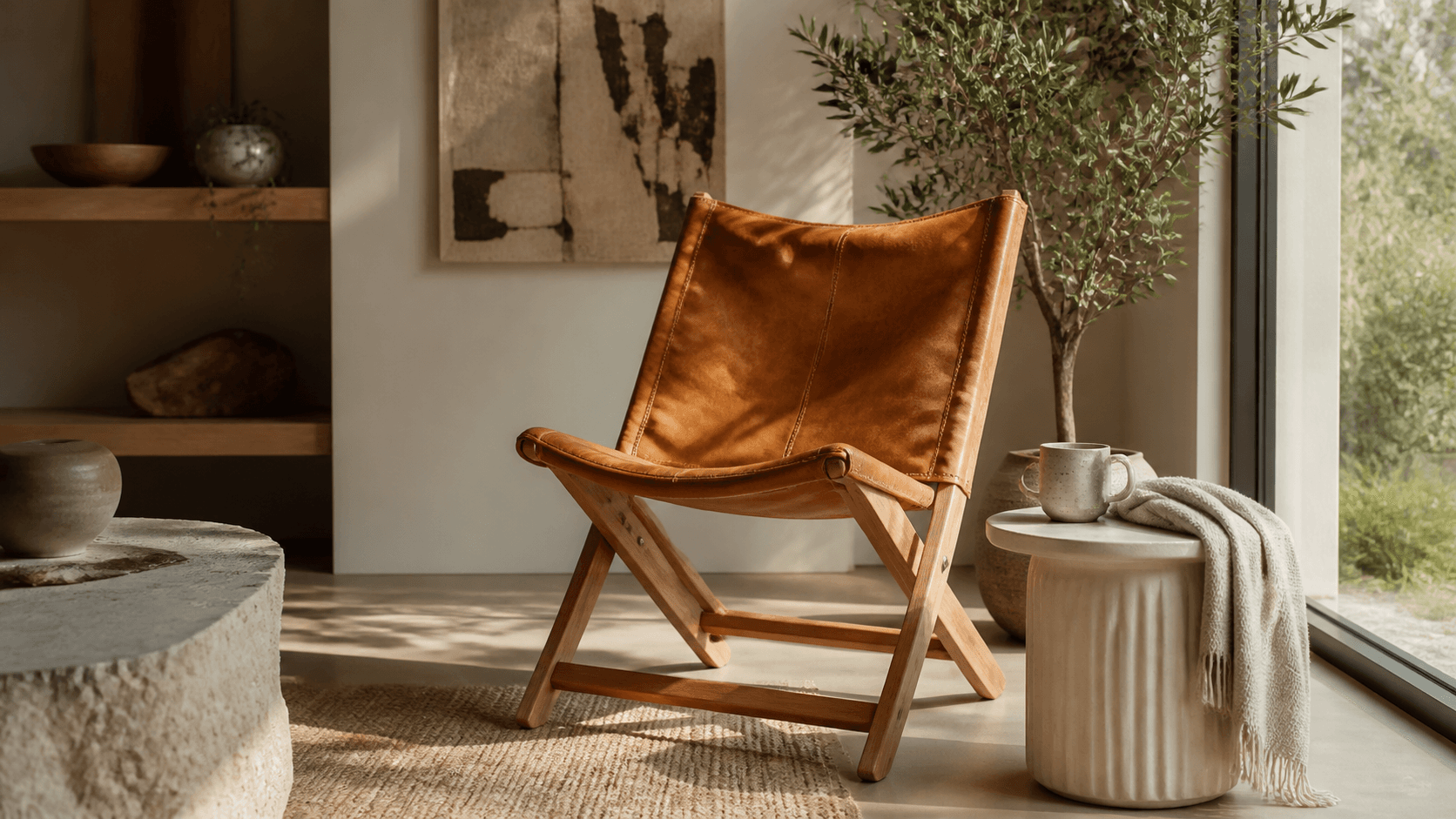
An artisan folding chair built with solid oak and genuine leather is a different story. With basic care, it is made to last for years. The leather softens and gains a rich patina. The wood grows smoother to the touch and more personal with every season outside. Instead of wearing out, it feels more like breaking in.
Think about cost per use:
- A disposable camp chair might get used a handful of weekends before it starts to fail
- An artisan folding chair is designed for repeated travel, setup, and daily sitting
- Over many summers, that higher one-time buy spreads out over far more uses
- The more you are outside, the more that long life really starts to matter
For people who camp, tailgate, or host often, durability changes everything. The chair goes from a throwaway item to a trusted piece of gear you plan around.
Repairs, Maintenance, and the Hidden Cost of Waste
When a cheap camp chair breaks, the story usually ends at the trash can. A torn synthetic seat, a popped rivet, a bent pole, or a cracked plastic arm is not easy to fix at home. Replacement parts are hard to find, and by the time you try to repair it, most people decide it is not worth the effort. That means more waste, time after time.
An artisan folding chair is built so it can be cared for and repaired. With natural materials, small fixes are part of its life:
- Leather can be conditioned to stay supple and resist drying
- Wood can be wiped down, lightly sanded, or refinished if it gets scratched
- Screws and hardware can be tightened or swapped when needed
- Joints are made to be maintained, not sealed away in mystery parts
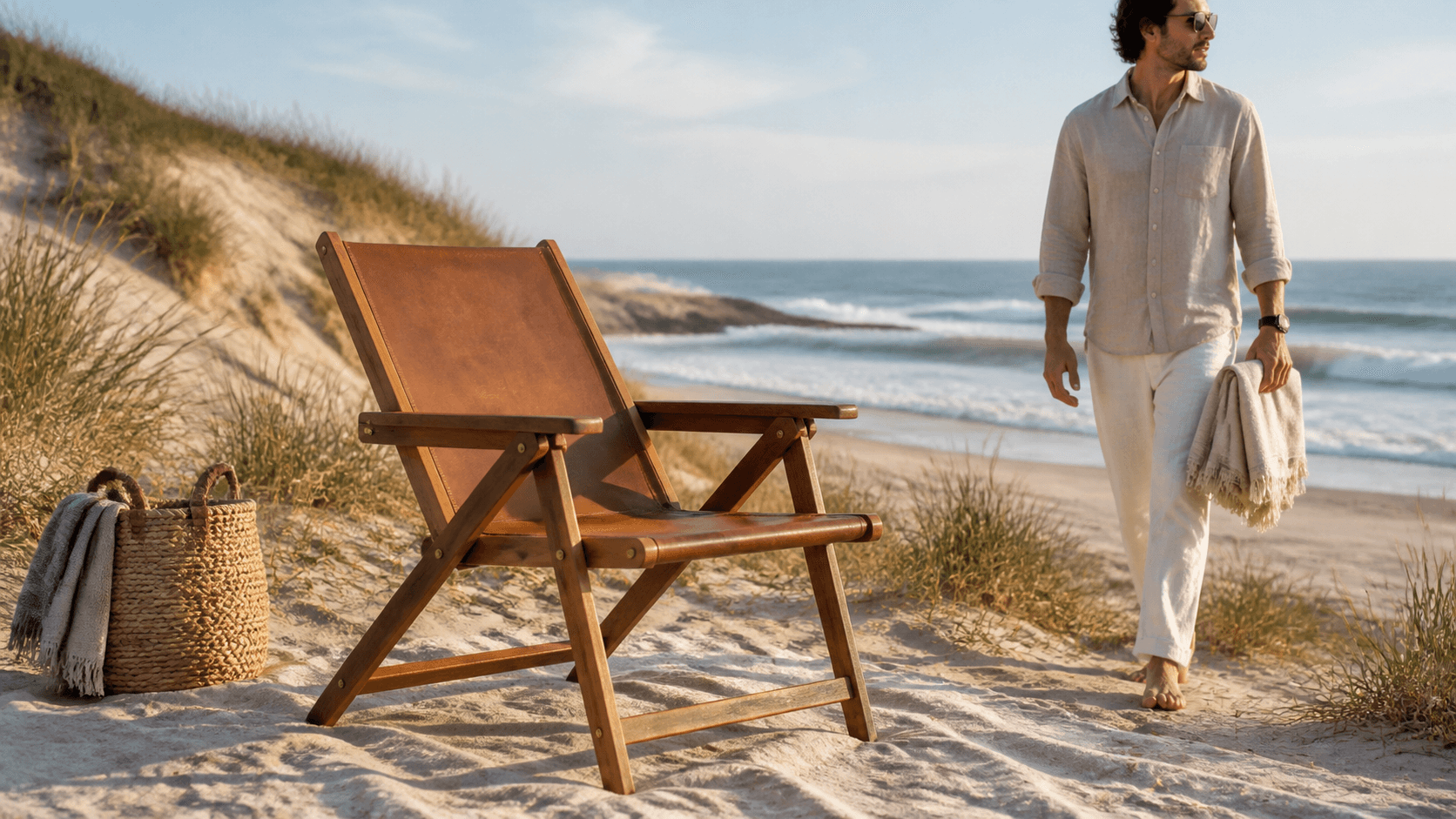
Simple seasonal habits help a lot. After a sandy beach day, a quick wipe keeps grit from grinding into the leather. Before peak summer, you can check screws, give the chair a light clean, and you are ready to go. That small bit of care keeps one chair in use instead of sending several broken ones to the landfill over the same stretch of years.
There is also an environmental cost per use. One long-lasting artisan folding chair avoids repeat manufacturing, shipping, and disposal. Instead of buying, breaking, and tossing over and over, you keep the same well-loved chair in your rotation.
Resale and Heirloom Value: What Happens After You Are Done
Disposable camp chairs usually have the same ending. They are used until something gives out, then hauled to the curb. Even if they are still standing, faded fabric and wobbly legs do not hold much value for anyone else.
An artisan folding chair can age in a very different way. With real oak and genuine leather, time adds character instead of just wear. A well-kept chair can look even more inviting after years of use. That kind of piece can hold its value as a classic, not just as old gear.
There are two paths here:
- Resale: If your space changes or your camping style shifts, a quality artisan folding chair can be listed and sold. Its materials, design, and condition all help you recapture some of what you spent.
- Heirloom: Some people choose to keep that chair in the family. It shows up at reunions, graduations, and yearly cookouts. Kids remember sitting in it while watching fireworks. Over time, the story around the chair matters as much as the chair itself.
Disposable chairs rarely have that kind of second chapter. A crafted, long-lived chair often does.
Comfort, Experience, and the Real Value of Every Sit
Cost per use is not just about dollars. It is also about how each sit actually feels. Many disposable camp chairs sag in the middle. The fabric cuts into your legs. The armrests are narrow and wobbly. After a long evening by the fire, your back and shoulders might feel it.
With an artisan folding chair, comfort is part of the design. A stable oak frame gives solid support. Genuine leather has a different feel from plastic cloth. It can mold gently to your shape, support your posture, and still feel good in warm weather.
That comfort changes how often you grab the chair. People are more likely to bring a favorite chair everywhere:
- To the sideline of a game
- To a concert in the park
- To a road trip picnic stop
- To every backyard gathering
The more you use it, the lower the true cost per use drops. Beyond that, there is an emotional layer. When a certain chair is there for first campouts, big family moments, and quiet mornings with coffee, it stops feeling like just gear. It becomes part of the memories of those days.
How to Choose an Artisan Folding Chair That Truly Pays Off
If you want a chair that earns its keep over many summers, it helps to know what to look for. A few key features make a big difference in long-term satisfaction.
Material choices matter:
- Solid hardwood, like oak, for strength and feel
- Full-grain or top-grain leather for comfort and long life
- Quality hardware and joinery to stand up to repeated folding
There are also good questions to ask before you buy:
- Is it built for both indoor and outdoor use, so it can move from patio to campsite to living room?
- Is the leather treated in a way that handles sun and light moisture when used with care?
- Can screws, straps, or hardware be repaired or replaced if needed?
- Does the maker stand behind the build quality and materials?
Think about portability too. A great artisan folding chair should travel well. Check its weight, folded size, and how it fits with your regular camping or tailgate setup. Setting it up should feel simple and smooth, not like a puzzle.
At ImImprint, we focus on handcrafted oak and genuine leather folding chairs that are built for this kind of life. They are designed to age with you, move from one setting to another, and support a thoughtful, low-waste, low-cost-per-use way of enjoying time outside.
Bring Thoughtful Comfort To Every Gathering
Choose seating that reflects your values for craftsmanship, comfort, and flexibility by exploring our artisan folding chair options. At ImImprint, we design pieces that are easy to move, simple to store, and beautiful enough to keep out every day. Let us help you find the right chairs to elevate your next event or refresh your favorite space. Reach out with your ideas and we will guide you to a solution that fits your style and your routine.